How Long Does Parking Lot Paving Take? A Commercial Property Manager’s Timeline Guide
A 50,000-square-foot commercial parking lot doesn’t get paved overnight, and if you’re a property manager trying to minimize tenant disruption while keeping a project on schedule, the timeline question matters as much as the price. So how long does parking lot paving take? For most mid-size commercial properties in southeastern Wisconsin, the window from first equipment on-site to a fully open, freshly striped lot runs three to ten business days. Larger or more complex projects, especially those with significant base failure or phased traffic management requirements, can stretch to two or three weeks.
This guide walks through every phase of a commercial paving project in sequence, covers the variables most likely to shift your schedule, and gives you the questions worth asking any contractor before work begins. The goal is to help you plan around your tenants, your deliveries, and your budget, not scramble after the fact.
The Short Answer: What to Expect for a Typical Commercial Parking Lot
Most commercial parking lot paving projects break into four working phases: site assessment and scheduling, site preparation, asphalt installation, and curing plus striping. Each phase has its own timeline, and they don’t always run back-to-back.
Here’s a quick reference for a typical mid-size commercial lot in the 20,000 to 75,000 square-foot range:
- Pre-project planning: 1 to 3 weeks before groundbreak
- Site prep and demolition: 1 to 3 days
- Asphalt paving and compaction: 2 to 5 days
- Curing, striping, and inspection: 1 to 3 days post-pave
Total elapsed time from the first machine on-site to a fully open lot: roughly 4 to 10 business days for straightforward projects. Smaller lots under 20,000 square feet can finish faster. Retail centers, industrial facilities, and municipal lots with complex layouts or phased requirements take longer. The pre-project phase is where most property managers lose time, so booking early is the most reliable way to protect your target completion date.
Phase 1: Site Assessment, Design, and Scheduling (1–3 Weeks Before Work Begins)
Before a single piece of equipment arrives, your contractor needs to assess the existing pavement, evaluate the subbase condition, confirm ADA compliance requirements, and finalize a paving plan. For most commercial properties, this takes one to three weeks, not because the work is slow, but because scheduling crews, equipment, and material delivery windows requires lead time.
During this phase, expect your contractor to review drainage patterns, identify areas of base failure, and determine whether a full-depth replacement or a mill-and-overlay makes more sense for your situation. That decision has a direct impact on your timeline and your budget. If you’re unsure which approach your lot needs, the guide on when to resurface versus seal coat is a practical starting point.
Permitting requirements vary by municipality across southeastern Wisconsin, so factor that in if your project involves new curbing, drainage modifications, or significant grade changes. Starting the contractor conversation four to six weeks ahead of your target start date gives you the most scheduling flexibility.
Phase 2: Site Preparation and Subbase Work (1–3 Days, Depending on Lot Size)
Site prep is where the heavy equipment shows up and the most critical structural work happens. For a full-depth replacement, this phase includes demolishing and hauling the existing pavement, grading the subbase, and compacting the base material before asphalt ever touches the ground.
For a mid-size commercial lot, demolition and hauling typically runs one to two days. Subbase grading and compaction adds another one to two days on top of that. If the base has significant soft spots, failed sections, or drainage problems, that timeline extends. Skipping or rushing this phase is the primary reason commercial lots develop premature cracking and depressions, so experienced contractors don’t cut corners here regardless of schedule pressure.
Overlay projects, where the existing pavement is milled down and a new surface course is applied over a sound base, move faster through this phase. Milling a large lot can often be completed in a single day, which is one reason resurfacing can cost significantly less and take less time than a full replacement when the subbase is still structurally solid.
Phase 3: Asphalt Paving and Compaction (1–5 Days for Most Commercial Lots)
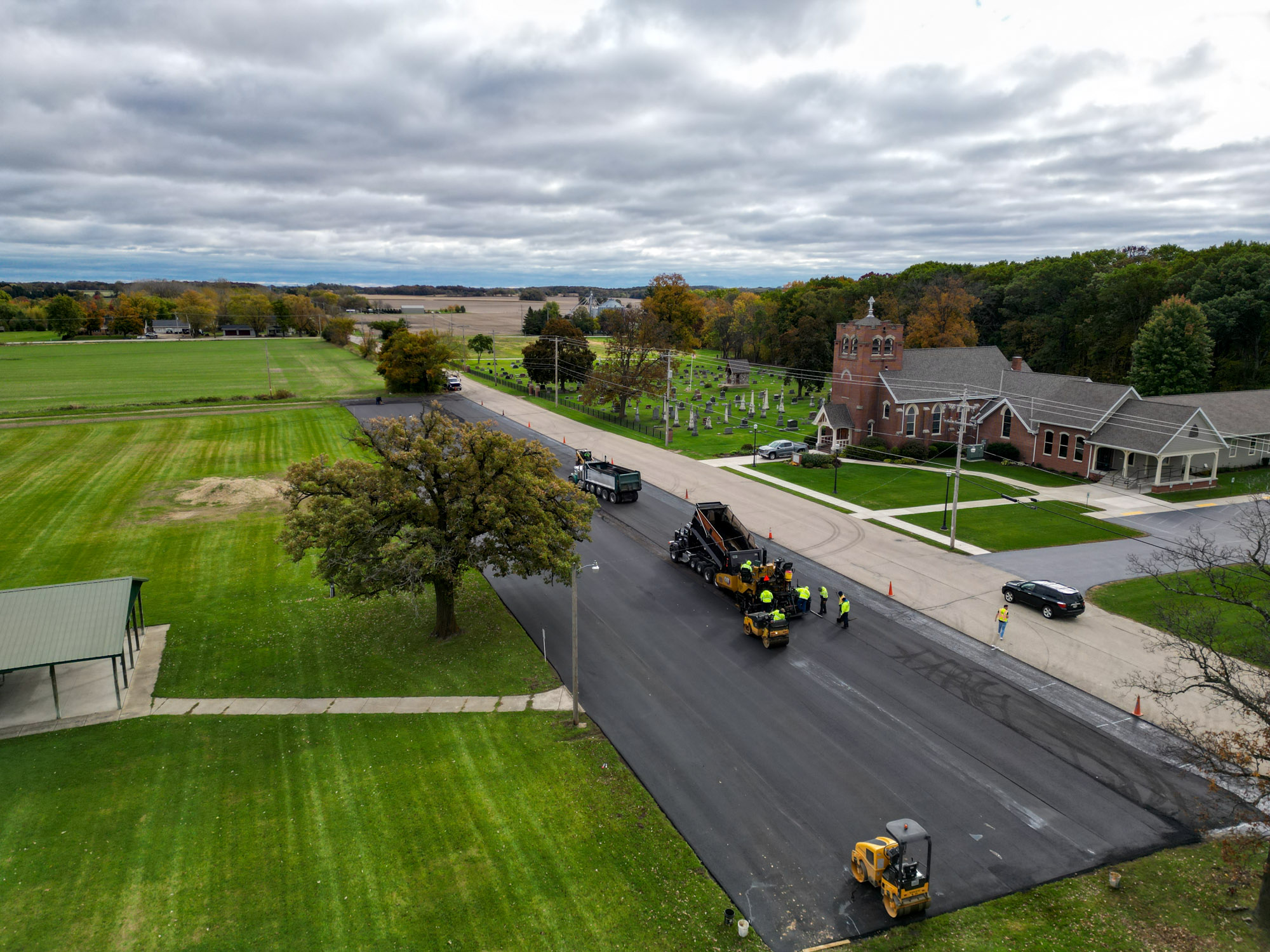
This is the phase most people picture when they think about paving: the paver laying hot-mix asphalt in lifts while steel drum rollers compact each layer behind it. The timeline here scales directly with square footage and project complexity.
- Lots under 20,000 sq ft: Paving and compaction typically completed in one day
- 20,000 to 75,000 sq ft: Two to three days for a single-phase pour
- Larger commercial or municipal lots: Three to five days, sometimes more
Phased paving, where sections of the lot remain open to traffic while others are being paved, adds time to the overall schedule but keeps your property operational during construction. Retail centers and multi-tenant office properties almost always benefit from a phased approach, even if it extends the project by a day or two. Your contractor should provide a sequencing plan before work starts so tenants and delivery drivers know exactly what to expect each day.
You can review examples of completed commercial asphalt paving projects to get a sense of the scope and scale of work involved across different property types.
Phase 4: Curing, Striping, and Final Inspection (24–72 Hours Post-Pave)
Freshly laid asphalt needs time to cure before it can handle normal vehicle loads. The standard guidance for commercial properties is 24 to 48 hours before passenger vehicles return to the lot. Heavy trucks, delivery vehicles, and anything with concentrated axle loads should wait a minimum of 72 hours. In hot weather, asphalt remains softer longer, which means parking on it too soon risks tire marks and surface deformation.
Striping and ADA-compliant markings are typically applied 24 to 48 hours after paving, once the surface has stabilized enough to hold paint properly. For most commercial lots, striping takes half a day. Lots with complex layouts, fire lanes, loading zones, accessible parking requirements, and directional arrows naturally take longer. Proper striping isn’t just a finish detail; it’s a safety and liability requirement. The case for getting it right is straightforward in this overview of pavement striping for safety.
A final walkthrough with your contractor before the lot fully reopens is worth scheduling, especially for large properties where sections were paved on different days.
Key Variables That Can Extend or Compress Your Project Timeline
No two commercial paving projects move at exactly the same pace. These are the factors most likely to shift your schedule in either direction.
- Lot size and square footage: The single biggest driver of paving time. A 10,000 sq ft service yard and a 100,000 sq ft retail center are fundamentally different projects.
- Full replacement vs. overlay: A mill-and-overlay on a sound subbase can shave two to three days off total project time compared to a full-depth replacement.
- Subbase condition: Widespread base failure means more excavation, more material, and more compaction time. This is often only confirmed once demolition begins.
- Weather in southeastern Wisconsin: Asphalt cannot be installed when surface temperatures fall below roughly 50°F. The practical paving season in this region runs late April through October. A surprise cold snap mid-project causes delays. Booking in spring or early fall before freeze-up is the best hedge against weather disruption. See the fall paving and maintenance schedule for seasonal planning guidance.
- Phased paving requirements: Keeping a portion of the lot open adds logistical complexity and typically one to two additional days.
- ADA and compliance work: New curb cuts, ramps, and compliant accessible parking layouts add time during both prep and striping phases.
- Crew and equipment availability: Peak season demand in the Milwaukee metro means contractors book out weeks in advance. Waiting until July to schedule a June project is a common and avoidable mistake.
Ready to get a realistic timeline for your specific property? Contact Asphalt Contractors Inc. for a project consultation and get a schedule you can actually plan around.
How to Plan Around Tenant, Customer, and Delivery Traffic During Paving
Operational continuity is usually the top concern for property managers overseeing a paving project at an occupied commercial property. The good news is that most projects can be staged to keep critical access points open throughout construction.
A few practical approaches that work well for retail centers, office complexes, and industrial facilities:
- Section the lot by zone: Pave the back rows or least-trafficked areas first, then rotate to the front once those sections cure and reopen.
- Coordinate delivery windows: Work with your contractor to schedule heavy paving days around your tenants’ peak delivery times. Loading docks and freight lanes should be among the last sections paved, not the first.
- Communicate early and often: Notify tenants and customers at least two weeks before work begins. Post signage at entries, send email updates, and give a day-by-day access map if the project runs longer than three days.
- Designate temporary overflow parking: If an adjacent property or street parking is available, arrange temporary use before the project starts, not the morning paving begins.
A well-organized contractor will provide a phasing plan and a daily schedule so you’re not guessing. Ask for that document before you sign anything. Quality asphalt work on a commercial property also carries long-term value; the connection between pavement condition and tenant retention is worth understanding. This piece on how quality asphalt enhances your commercial property covers that angle in more detail.
Questions to Ask Your Paving Contractor Before Work Begins
The right contractor conversation before groundbreak prevents most timeline surprises. Here are the questions worth asking directly:
- What is the exact project sequence and daily schedule? You need a written phasing plan, not a verbal overview.
- What subbase conditions could change the timeline or cost? Ask how they handle base failures discovered during demolition and whether that triggers a change order process.
- What weather thresholds will pause the project? In Wisconsin, this matters. Get specifics on the temperature and precipitation limits they work within.
- Who is my point of contact on-site each day? Large commercial projects need a dedicated project manager, not just a crew foreman.
- How will you handle access for emergency vehicles and tenant deliveries during construction? This should be in the contract, not an afterthought.
- What is the warranty on materials and workmanship? A commercial paving investment in the range of $50,000 to $300,000 or more deserves a clear written warranty.
Reviewing feedback from other commercial clients can help you evaluate a contractor’s track record. The parking lot asphalt services review page gives real-project perspective from property owners who have been through the process.
Frequently Asked Questions
How long does it take to pave a 50,000-square-foot commercial parking lot?
A 50,000-square-foot commercial lot typically takes three to five days of active paving and compaction work, assuming straightforward site conditions and a full-depth replacement. Add one to two days for site prep and demolition, and another one to two days post-pave for curing and striping. Total elapsed time from groundbreak to a fully reopened, striped lot generally runs seven to ten business days. Projects with significant base failure, phased traffic management, or ADA modification work will take longer.
Can my parking lot stay partially open during paving work?
Yes, in most cases. Phased paving is standard practice for occupied commercial properties. Your contractor divides the lot into sections, paves one zone at a time, and allows cured sections to reopen before moving on to the next. This approach keeps at least a portion of your lot accessible throughout the project. It does add one to two days to the overall schedule compared to closing the entire lot at once, but for retail centers, medical offices, and multi-tenant properties, the operational continuity is usually worth it.
How soon can vehicles drive on freshly paved asphalt?
Passenger vehicles can typically return to a freshly paved commercial lot after 24 to 48 hours. Heavy trucks, delivery vehicles, and equipment with concentrated axle loads should wait at least 72 hours. In hot weather (above 85°F), asphalt stays softer longer, so waiting the full 48 hours for light traffic is the safer call. Parking on fresh asphalt too soon can cause surface deformation, tire impressions, and edge cracking that voids workmanship warranties.
What time of year is best for scheduling commercial parking lot paving in Wisconsin?
The practical paving season in southeastern Wisconsin runs from late April through October, when ground and air temperatures are consistently above the roughly 50°F threshold required for proper asphalt installation and compaction. Late spring (May to June) and early fall (August to September) are the most popular windows. Booking early in the season or in late summer for fall completion gives you the most contractor availability and the lowest risk of weather delays. Waiting until peak summer to schedule often means limited crew availability and longer lead times.
Does resurfacing an existing lot take less time than a full replacement?
Generally, yes. A mill-and-overlay (resurfacing) project skips the full demolition and subbase rebuilding phases, which typically shaves two to three days off total project time compared to a full-depth replacement. The tradeoff is that resurfacing is only appropriate when the existing subbase is still structurally sound. If there’s widespread base failure, cracking from the bottom up, or significant drainage problems, a full replacement is the right call even though it takes longer. A thorough site assessment before any contract is signed is the only way to know which approach your lot actually needs.
How far in advance should a property manager schedule a paving project?
For most commercial paving projects in the Milwaukee metro and southeastern Wisconsin, booking four to six weeks ahead of your target start date is a reasonable minimum. During peak season (June through August), reputable contractors often fill their schedules eight to twelve weeks out. If your project involves permitting, significant ADA modifications, or a phased approach that requires detailed planning, starting the contractor conversation even earlier gives you more options. The pre-project planning phase itself takes one to three weeks, so factoring that into your timeline from the beginning prevents scheduling compression later.
Commercial parking lot paving is a multi-phase process with a realistic total window of four to ten business days for most properties in southeastern Wisconsin, and longer for larger or more complex sites. The variable that property managers consistently underestimate is the pre-project lead time. Contractor schedules, material availability, permitting, and site assessment all happen before the first machine arrives, and rushing that phase is the fastest way to end up with a project that starts late, runs over, or delivers subpar results.
Asphalt Contractors Inc. works with commercial property owners and managers across the Milwaukee metro and southeastern Wisconsin on projects ranging from surface overlays to full-depth lot replacements and municipal-scale road work. If you have a paving project on the horizon, the right time to start the conversation is now, not when your pavement situation becomes urgent. Reach out to Asphalt Contractors Inc. to discuss your property’s timeline, get a realistic schedule, and plan a project your tenants and customers won’t have to suffer through. You can also review our completed commercial paving projects to see the scope of work we handle across the region.