Commercial Asphalt Patching Contractor in Milwaukee, WI
A pothole in a busy loading dock approach doesn’t stay a nuisance for long. It becomes a liability claim, a damaged fleet vehicle, or a citation from a city inspector. Commercial properties across Milwaukee and southeastern Wisconsin face accelerating pavement deterioration every year, driven by freeze-thaw cycles, heavy truck traffic, and aging sub-bases that simply weren’t designed for today’s load demands. Finding a qualified asphalt patching contractor in Milwaukee, WI with the equipment and crew size to address the problem at scale is what separates a quick fix from a repair that actually holds.
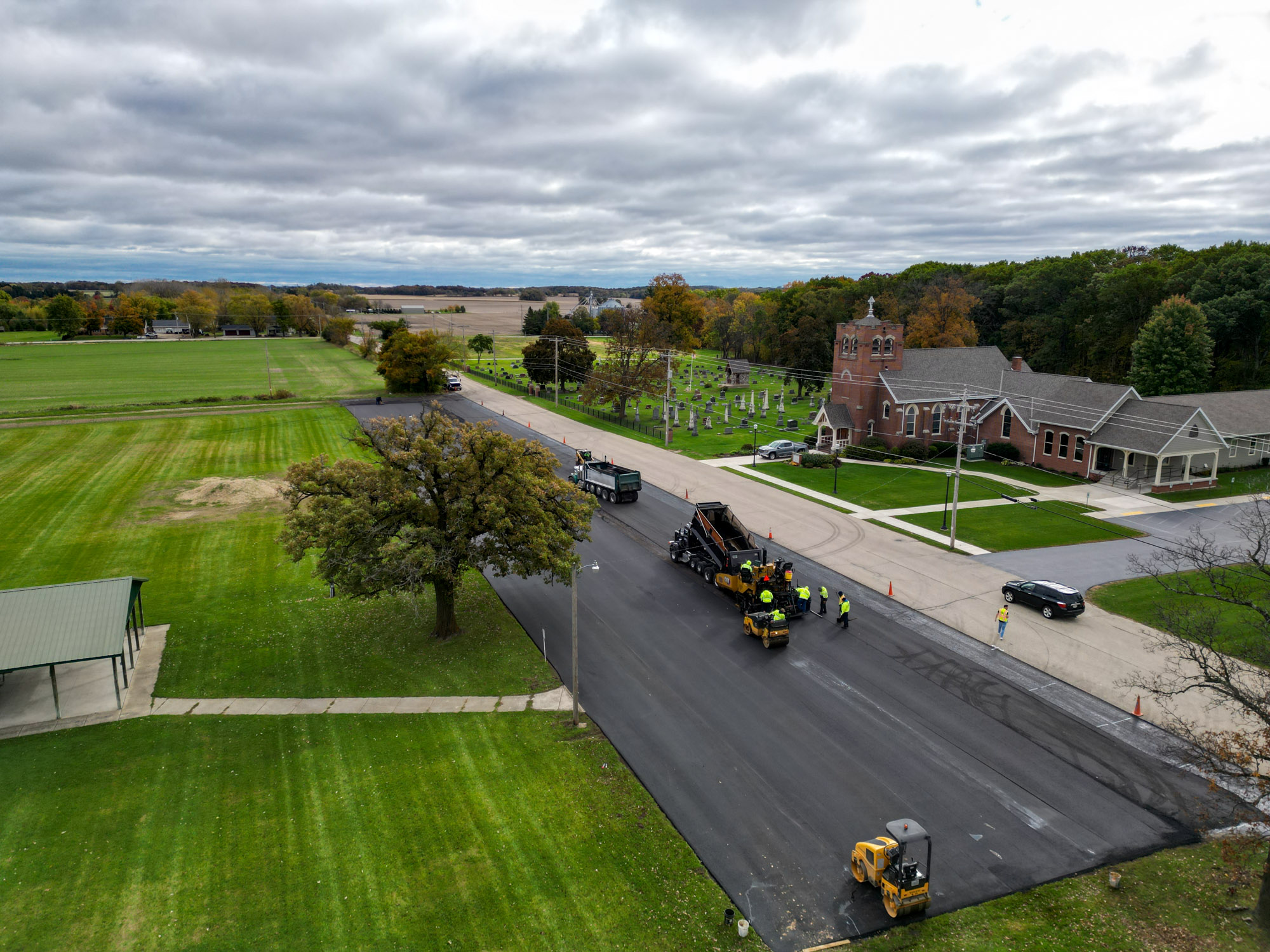
At Asphalt Contractors Inc., we work exclusively at commercial scale. Parking lots, access drives, industrial pads, municipal roadways, logistics yards. If your pavement is failing and your tenants, customers, or fleet operators are noticing, we can assess the damage, recommend the right patching method, and get crews mobilized fast.
Why Commercial Properties in Milwaukee Can’t Ignore Pavement Damage
Milwaukee’s climate is unforgiving on asphalt. Average winter temperatures regularly dip below 20°F, and the city records dozens of freeze-thaw cycles per season. Water infiltrates surface cracks, expands when it freezes, and breaks apart the pavement matrix from the inside. By spring, what was a hairline crack in October is often a full-depth failure in April.
For commercial property owners, that damage carries real financial weight. A pothole in a high-traffic parking lot or a failing section of an access drive creates direct liability exposure if a vehicle is damaged or a pedestrian is injured. Insurance carriers increasingly scrutinize pavement maintenance records. Deferred repairs also compound cost: a localized patch that might run a few thousand dollars today can double or triple in scope if the surrounding pavement continues to deteriorate.
Beyond liability, pavement condition affects how tenants and customers perceive a property. A crumbling lot signals deferred maintenance across the board, which matters when lease renewals come around or when a prospective tenant is evaluating competing sites. Staying ahead of pavement failure is a property management discipline, not just a maintenance task.
What Our Asphalt Patching Services Cover for Milwaukee Businesses
Not every pavement failure calls for the same repair. We offer three primary patching methods at commercial scale, and selecting the right one depends on failure depth, surface area, and how the pavement is used.
- Saw-Cut Full-Depth Patching: The most structurally sound option for failed sections. We saw-cut clean edges around the damaged area, remove material down to the sub-base, address any base deficiencies, and compact fresh hot-mix asphalt in lifts. The clean vertical edges bond properly with surrounding pavement, extending the life of the repair significantly. This is the right method for alligatored sections, utility cut failures, and areas with base saturation.
- Infrared Patching: Infrared technology heats the existing asphalt to a workable temperature, allows us to rework and blend new material into the surface, and produces a seamless repair with no cold joints. It’s faster and less disruptive than saw-cut patching, making it well-suited for surface-level failures on high-traffic lots where minimizing downtime matters.
- Cold-Mix Emergency Patching: When a pothole is creating immediate safety or liability exposure and weather or scheduling won’t allow a permanent repair right away, cold-mix patching provides a temporary fix that keeps the area safe. We’re clear with clients that cold-mix is a bridge solution, not a permanent one.
We also handle large-area patching across entire sections of a parking lot or access road, not just isolated spots. If you’re managing a 200-stall lot with widespread surface failures, we can scope a phased repair plan that addresses the worst areas first while staying within a capital budget.
Common Causes of Commercial Asphalt Deterioration in Southeastern Wisconsin
Understanding why your pavement is failing helps prioritize the right repair strategy. These are the most common failure drivers we see on commercial sites across the Milwaukee metro.
- Freeze-thaw cycling: Southeastern Wisconsin averages more than 100 freeze-thaw events per year in some seasons. Water in subsurface voids expands by roughly 9% when it freezes, fracturing the pavement structure repeatedly over winter.
- Heavy axle loads: Parking lots and access drives designed for passenger vehicles often carry semi-trucks, delivery vans, and heavy equipment over time. Load stress beyond the original design spec accelerates base failure and surface cracking.
- Poor drainage and standing water: Water is the primary enemy of asphalt longevity. Flat grades, clogged drains, and insufficient crown design allow water to pond and infiltrate. Once the sub-base becomes saturated, surface failure follows quickly.
- Oxidation and surface aging: UV exposure and oxidation dry out the binder in asphalt mix over time, causing the surface to become brittle and crack-prone. Properties that skip routine seal coating cycles accelerate this process.
- Utility cuts and poor trench restoration: Water, gas, and telecom utilities cut through commercial pavement regularly, and improperly restored trenches are a leading source of premature patching needs on urban commercial sites.
For more on how these factors affect the overall lifespan of a commercial pavement system, see our guide on understanding asphalt lifespan and durability factors.
Our Patching Process: How We Restore Your Commercial Pavement
We don’t show up with a cold-mix bag and call it a day. Commercial patching at scale requires a defined process to produce repairs that last.
- Site Assessment: We walk the property with your facilities director or property manager, document all failure areas, photograph conditions, and assess sub-base integrity where relevant. This gives us the information to recommend the right patching method for each zone.
- Scope and Scheduling: We produce a written scope with method specifications and sequence the work to minimize disruption to your operations. For multi-tenant properties, we coordinate lane-by-lane or section-by-section scheduling so traffic flow is maintained.
- Surface Preparation: Saw cuts are made with precision equipment. Deteriorated material is removed and hauled off. Sub-base issues are addressed before new asphalt goes down.
- Patching and Compaction: Hot-mix asphalt is placed in appropriate lifts and compacted with roller equipment to meet density specifications. Edges are treated to ensure bonding with surrounding pavement.
- Final Inspection: We walk the completed work with your team before we leave the site. If striping or other surface markings were disturbed, we coordinate restriping as part of the project closeout.
When to Patch vs. When to Mill and Repave: Guidance for Property Managers
This is the question we get most often from facilities directors, and it deserves a straight answer rather than a sales pitch.
Patching makes sense when failures are localized, the surrounding pavement has structural integrity, and the base is stable. If a 50,000-square-foot lot has failures concentrated in two or three sections totaling 5% of the surface area, patching those sections and maintaining the rest extends the useful life of the overall lot without a full capital outlay.
Milling and repaving becomes the right call when failures are widespread and interconnected, when the sub-base has been compromised across broad areas, or when the pavement is so oxidized and brittle that patching one section simply pushes failures into adjacent areas within a season or two. At that point, continued patching is money spent on a system that’s past its service threshold.
A useful rule of thumb: if more than 25 to 35 percent of a lot surface requires repair, a full mill and overlay often delivers better cost-per-square-foot value over a 15-year horizon than repeated patch cycles. We’ll give you an honest assessment of where your property falls.
For a deeper look at how patching, resurfacing, and seal coating compare as long-term strategies, our editorial team has covered this in detail: how to know when it’s time to resurface vs. seal coat. And if you’re evaluating the financial case for ongoing maintenance versus deferral, the benefits of maintaining your asphalt lays out the cost math clearly.
Industries and Commercial Properties We Serve Across Milwaukee
Our crews work across the full range of commercial and municipal property types in the Milwaukee metro and southeastern Wisconsin. A few of the segments we serve regularly:
- Industrial and warehouse campuses: The Oak Creek industrial corridor and Menomonee Valley have some of the highest pavement stress environments in the region, with heavy forklift traffic, semi-truck staging, and year-round operations that don’t allow for extended closure windows.
- Retail strip centers and big-box sites: High-volume surface lots with constant passenger vehicle traffic, delivery zones, and cart corrals that create specific wear patterns requiring targeted patching approaches.
- Office parks and multi-tenant commercial complexes: Waukesha County commercial parks and the suburban Milwaukee office corridors often involve phased repair planning across multiple buildings and ownership structures.
- Logistics and distribution yards: Container yards, trailer drop lots, and fleet staging areas sustain concentrated load stress that standard lot design doesn’t account for. We’ve worked on facilities throughout the I-94 corridor serving regional distribution hubs.
- Municipal and county facilities: Public works yards, municipal parking facilities, park infrastructure, and county-maintained access roads. We understand public-sector bidding and project documentation requirements.
- Healthcare and institutional campuses: Patient access, emergency vehicle lanes, and staff parking structures where ADA compliance and uninterrupted access are non-negotiable constraints on scheduling.
See examples of our completed commercial work in our asphalt paving projects portfolio.
Why Milwaukee Property Owners Choose Asphalt Contractors Inc.
A few things distinguish how we operate from general paving contractors who take on commercial jobs occasionally.
- Local crews with SE Wisconsin climate knowledge: Our crews work in Milwaukee winters. We know how to read pavement conditions in spring when frost is still leaving the ground, and we know which mix specifications hold up in this region’s temperature range.
- Commercial-scale equipment: We run equipment sized for commercial lots and roadways. That means proper compaction, faster mobilization across large areas, and the capacity to handle multi-phase projects without renting in capacity.
- Dedicated project management: For complex or multi-phase patching programs, you work with a project manager who coordinates scheduling, phasing, and site communication with your team. You’re not chasing a crew foreman for updates.
- Multi-site capability: If you manage a portfolio of commercial properties across Milwaukee, Racine, or Waukesha County, we can scope and sequence repairs across multiple sites under a single contract, which simplifies procurement and vendor management.
- Honest scoping: We tell clients when patching isn’t the right answer for a given site condition. That kind of recommendation costs us a smaller job sometimes, but it builds the kind of relationship where you call us for the larger project when the time comes.
For a broader look at our commercial paving capabilities across the region, visit our Milwaukee commercial paving services page and our southeastern Wisconsin commercial asphalt maintenance overview.
Request a Commercial Asphalt Patching Quote in Milwaukee
The best starting point is a site assessment. One of our project managers walks your property, documents the failure areas, and delivers a written scope with method recommendations and pricing. There’s no obligation, and you’ll leave the conversation with a clear picture of what your pavement needs and what it will cost.
We work directly with property managers, facilities directors, and ownership groups. If you need us to coordinate with a tenant or building management team to schedule around business hours, we do that routinely.
Call us or submit a quote request online to schedule your site assessment. For commercial patching projects with active safety concerns, mention that when you reach out and we’ll prioritize scheduling accordingly.
You can also review our full range of Milwaukee commercial asphalt services to see how patching fits into a broader pavement management program.
Frequently Asked Questions
How quickly can you mobilize for an emergency asphalt patching job at our Milwaukee facility?
For active safety hazards, we prioritize scheduling and can often mobilize within 24 to 48 hours for emergency cold-mix stabilization, with a permanent repair scheduled as soon as weather and mix availability allow. Response time depends on current project load and the scope of the repair, so contact us directly and describe the condition so we can give you an accurate timeline.
What is the difference between a surface patch, full-depth patch, and mill-and-fill for commercial pavement?
A surface patch addresses failures confined to the top layer of asphalt with no base involvement. A full-depth patch (saw-cut and remove) addresses failures that extend through the asphalt layers into the sub-base, and includes base repair before new asphalt is placed. Mill-and-fill involves grinding down a defined depth of existing asphalt across a broader area and replacing it with fresh hot-mix, which is appropriate when surface failures are widespread but the base is still structurally sound. Selecting the right method requires a physical assessment of the failed area.
How long does commercial asphalt patching last before we need to consider full replacement?
A properly executed full-depth patch on a stable sub-base can last 8 to 15 years. Infrared patches on surface-level failures typically hold 5 to 10 years with proper maintenance. Cold-mix temporary patches are intended to last weeks to months, not years. The longevity of any patch depends heavily on sub-base condition, drainage, traffic loads, and whether an ongoing maintenance program (including seal coating on appropriate areas) is in place. A pavement system that’s broadly oxidized and cracking may see shorter patch life because the surrounding asphalt continues to deteriorate around stable repairs.
Can asphalt patching be done in Wisconsin winters, or do we have to wait until spring?
Hot-mix asphalt patching requires pavement and air temperatures above approximately 40°F to ensure proper compaction and adhesion, which limits full-depth patching work in Milwaukee from roughly December through early March in most years. Cold-mix patching can be placed in subfreezing temperatures as a temporary measure to address active hazards through winter. If you have failing areas identified now, we can assess them and schedule permanent repairs for the earliest viable window in spring. Getting on the schedule early matters because spring demand fills up quickly.
Will you work directly with our property management team or facilities director to schedule around business hours?
Yes. We coordinate scheduling directly with whoever manages the site, whether that’s a property manager, facilities director, or on-site building superintendent. For retail sites, we can phase work during overnight or early-morning hours to avoid peak customer traffic. For industrial sites, we sequence repairs around shift changes or production schedules. Clear scheduling communication is part of every commercial project we take on.
Do you handle large-scale patching across multiple commercial sites or entire parking lots, not just small repairs?
Large-scale patching is a core part of what we do. We regularly scope and execute patching programs covering thousands of square feet across a single lot, or coordinate multi-site repair contracts for property management companies overseeing portfolios across Milwaukee, Waukesha, and Racine counties. If your situation involves more than a handful of isolated spots, we’ll develop a phased repair plan that prioritizes the worst failures, sequences work to minimize operational disruption, and gives you a clear picture of total project cost before work begins.
Pavement failures don’t get cheaper with time. A $4,000 patch today can become a $40,000 base reconstruction project if water infiltration is allowed to continue through another winter cycle. Asphalt Contractors Inc. has worked on commercial properties throughout Milwaukee, Oak Creek, Waukesha County, and the broader southeastern Wisconsin market for years, and we bring that regional experience to every site assessment.
Schedule a site walk with our team. We’ll document your pavement conditions, recommend the right patching approach for each failure area, and give you a written quote you can take to ownership or budget review. Call us directly or use our online quote request form to get started.