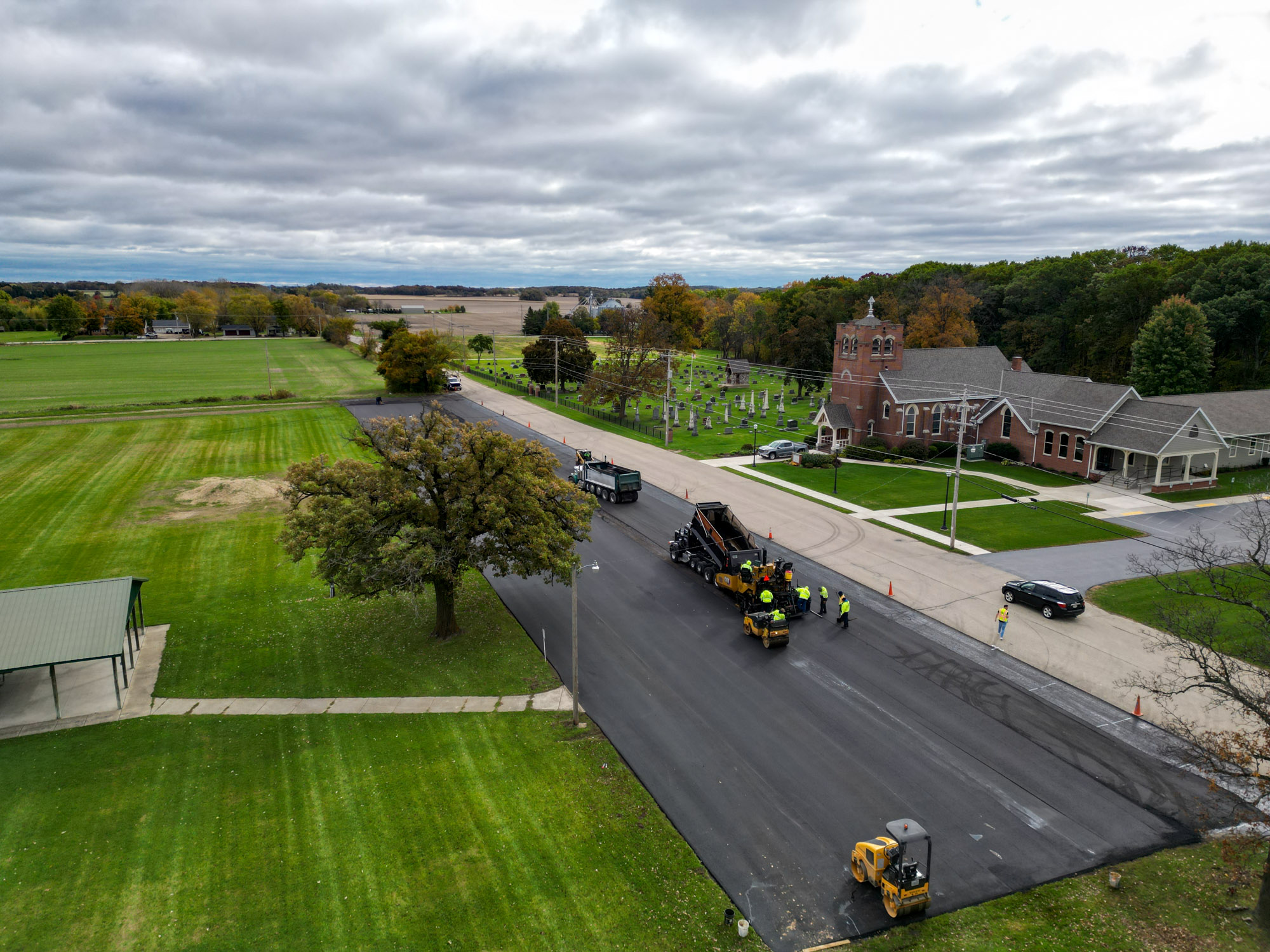
Road Reconstruction Contractor in Southeast Wisconsin
Road infrastructure in southeastern Wisconsin takes a beating. Between polar freeze-thaw cycles that crack base layers from the inside out, clay-heavy subgrades that shift seasonally, and the relentless axle loads from industrial freight corridors in Racine, Kenosha, Waukesha, and Milwaukee counties, failed pavement is rarely a surface problem. Asphalt Contractors Inc. is a road reconstruction contractor southeast Wisconsin municipalities, general contractors, and large commercial property owners trust when the scope goes beyond a patch or an overlay. We perform full-depth reconstruction work: subgrade correction, base reclamation, structural asphalt placement, and WisDOT-spec compliance from start to finish.
Whether the project is a municipal street reconstruction contract, an industrial access road serving heavy trucking, or a private road network inside a business park, we operate at the equipment scale and technical depth those projects demand. This page explains our process, the project types we serve, and how to initiate a formal bid.
What Road Reconstruction Actually Involves at a Commercial and Municipal Scale
Road reconstruction is not a surface treatment. It’s the complete removal and replacement of a failed or functionally obsolete roadway, addressing every structural layer from the native subgrade upward.
At a commercial and municipal scale, that typically means:
- Full-depth removal of existing asphalt and base material, often 8 to 18 inches of combined section depending on traffic loading and design life requirements
- Subgrade evaluation and stabilization, including geotechnical assessment, soft-spot remediation, and moisture management before any structural material goes back in
- Aggregate base reconstruction to specified compaction grades, using crushed stone or reclaimed material where mix designs allow
- Full-depth reclamation (FDR) as an engineered alternative on qualifying roads, pulverizing the existing structure and stabilizing it in place before resurfacing
- Multi-lift asphalt placement with binder and surface courses matched to projected load class and climate exposure
- Drainage and utility coordination, including catch basin adjustments, inlet grading, and utility cut restoration at scale
Each of these phases requires dedicated equipment, certified inspection, and a contractor who understands how design decisions in one layer affect performance in every layer above it.
Why Southeast Wisconsin Roads Need Specialized Reconstruction Expertise
SE Wisconsin’s geology and climate create a specific set of failure conditions that a contractor without regional experience will underestimate.
Freeze-thaw cycling. Milwaukee averages more than 100 freeze-thaw cycles per year. Each cycle forces moisture into micro-cracks, expands it, and widens the fracture. Roads without adequate drainage or insufficient base depth fail from the bottom up, often well before surface distress becomes visible to a property or operations manager.
Clay-heavy soils. Much of Racine, Kenosha, and Waukesha County sits on glacial lake-bed clays and silty soils with high plasticity indices. These soils expand when wet and shrink when dry. Without proper subgrade stabilization or geotextile separation, base material pumps down into the subgrade under load, collapsing the road section within a few seasons of initial construction.
Industrial and commercial traffic loads. The freight corridors and industrial campuses across SE Wisconsin generate axle loads that exceed the design parameters of many older roadways. A reconstruction contractor operating in this region needs to spec pavement sections for current load reality, not the lighter traffic volumes the original road was built for decades ago.
These conditions are not theoretical. They show up on every project. Accounting for them at the design and materials stage is what separates a road that lasts 20 years from one that fails in five.
Our Road Reconstruction Process: From Subgrade to Surface
Every project follows a structured sequence. Skipping or shortcutting any phase creates the same failure modes the reconstruction was supposed to eliminate.
- Site assessment and project scoping. We evaluate existing pavement conditions, pull cores to assess remaining structural depth, review drainage patterns, and identify subgrade problem areas before any bid goes out. This step determines whether full reconstruction, full-depth reclamation, or a hybrid approach is the right call.
- Subgrade preparation. Soft or unstable soils are addressed through undercutting, select fill placement, lime or cement stabilization, or geotextile installation depending on soil classification and load requirements.
- Base course construction. Crushed aggregate base is placed and compacted in lifts to specified density, with moisture and compaction testing at each stage.
- Asphalt placement. Binder and surface courses are placed using equipment calibrated to the mix design and layer thickness. We work with WisDOT-approved mix designs and can source material from our Union Grove asphalt manufacturing facility, giving us direct control over material quality and supply chain timing.
- Final grading, drainage, and markings. Finished road surfaces are verified for cross-slope, drainage relief, and any required pavement marking prior to project closeout.
Commercial and Municipal Projects We Serve Across SE Wisconsin
Our project portfolio covers the full range of commercial and public-sector road reconstruction work in the region. Specific project types include:
- Municipal street reconstruction contracts for cities, villages, and counties across Milwaukee, Racine, Kenosha, and Waukesha counties, working under WisDOT specifications and local bid requirements
- Industrial access roads serving manufacturing facilities, distribution centers, and port-area freight operations where load classes exceed standard roadway design
- Private road networks within business parks and corporate campuses, including multi-lane internal circulation roads that carry significant truck and fleet traffic
- Utility cut restoration at scale, rebuilding road sections disturbed by water main, sewer, or conduit work to full structural equivalency
- Large commercial campus road systems at hospitals, universities, logistics hubs, and large retail centers requiring coordinated phasing to keep operations running during construction
We function as both a prime contractor on public bid projects and as a subcontractor to general contractors and civil engineering firms. Our bonding capacity, certified personnel, and equipment fleet are scaled to projects where those qualifications matter. You can review a selection of completed work in our asphalt paving projects portfolio.
Road Reconstruction vs. Resurfacing: Choosing the Right Scope
Not every deteriorated road needs full reconstruction. Choosing the wrong scope in either direction wastes money.
Resurfacing (mill and overlay) works when the existing base and subgrade are structurally sound and the distress is confined to the top two to four inches of asphalt. If the base has failed, if rutting exceeds an inch or more, or if subgrade problems are present, overlaying the surface only delays the inevitable by three to five years at most.
Full reconstruction is warranted when cores show base contamination, when alligator cracking extends through the full pavement depth, when settlement indicates subgrade movement, or when the road is being upgraded to carry significantly higher load classes than it was originally designed for.
Full-depth reclamation sits between those two options. FDR pulverizes the existing pavement and upper base in place, treating the blended material as a new stabilized base. It’s cost-effective on roads where the existing aggregate is worth reclaiming and where right-of-way or utility constraints make full excavation impractical.
We walk through this analysis on every project before a scope recommendation goes to the client. For additional context on pavement condition assessment, see our resource on understanding asphalt lifespan and when to replace pavement.
Why General Contractors and Municipalities Choose Asphalt Contractors Inc.
Several factors come up repeatedly when GCs and municipal project managers explain why they bring us in.
Material sourcing control. Our Union Grove manufacturing facility means we’re not waiting on a third-party plant for mix availability. On time-sensitive municipal contracts or phased commercial projects, that control matters.
WisDOT compliance experience. Public-sector road reconstruction in Wisconsin requires adherence to WisDOT contractor standards and specifications. Our team works within those requirements regularly, which reduces compliance risk for GCs using us as a paving subcontractor and for municipalities contracting us directly.
Equipment depth. Full-depth reconstruction requires milling machines, reclaimer/stabilizers, motor graders, compaction equipment, and high-capacity pavers operating in coordinated sequence. We maintain that equipment in-house rather than relying on rentals that may not be available when a project window opens.
Regional track record. We’ve been operating across SE Wisconsin long enough to know which soil conditions show up in which parts of Racine County, where drainage problems tend to recur in Waukesha County, and how to phase work around the industrial operations that can’t go offline. That local knowledge shortens project timelines and reduces change order exposure. See how our commercial work fits into the broader regional picture in our overview of commercial asphalt solutions in Racine.
Service Areas: Counties and Communities We Operate In
Asphalt Contractors Inc. serves the full southeastern Wisconsin region, with primary concentration in:
- Milwaukee County: commercial corridors, municipal street contracts, and large-campus road systems
- Racine County: industrial access roads, port-area infrastructure, and municipal reconstruction projects
- Kenosha County: freight corridor reconstruction, business park road networks, and utility restoration work
- Waukesha County: commercial campus roads, municipal contracts, and industrial facility access
We also serve Jefferson, Walworth, and Ozaukee counties for qualifying commercial and municipal projects. For project inquiries in the Milwaukee metro area, our Milwaukee commercial asphalt services page covers scope and capabilities in more detail.
Request a Road Reconstruction Bid in Southeast Wisconsin
Road reconstruction bids require accurate project information to be useful. Before reaching out, it helps to have a general sense of the road length and width, the current surface condition, any known subgrade or drainage issues, the desired project timeline, and whether the project is publicly bid or privately contracted.
We accept bid requests from municipalities, counties, general contractors, civil engineering firms, and large commercial property owners directly. We can operate as a prime contractor or as a paving subcontractor depending on project structure.
To initiate a formal bid or schedule a site assessment, contact our commercial project team through our commercial paving contact page or call us directly. We’ll confirm project eligibility and schedule a site visit to gather the field data needed to produce an accurate, defensible proposal.
Frequently Asked Questions
What is the difference between road reconstruction and road resurfacing?
Resurfacing (typically a mill and overlay) replaces only the top asphalt layer and is appropriate when the underlying base and subgrade are still structurally sound. Road reconstruction removes and replaces the full pavement section, including base and subgrade work, and is required when the structural failure extends below the surface. Choosing the wrong scope means either overspending on reconstruction that wasn’t needed or resurfacing over a base that will continue to fail.
How long does a full road reconstruction project typically take?
Project duration depends on road length, width, existing conditions, and phasing requirements. A straightforward industrial access road of a few hundred feet may take one to two weeks from mobilization through final surface. A multi-block municipal street reconstruction contract with utility coordination can run four to eight weeks or longer. We provide realistic schedule estimates during the bidding phase based on actual site conditions, not generic timelines.
Do you work directly with municipalities and local government agencies in Wisconsin?
Yes. We hold the bonding, insurance, and WisDOT compliance credentials required for public-sector contracting in Wisconsin. We respond to municipal bid solicitations directly and have completed road reconstruction contracts for communities across Milwaukee, Racine, Kenosha, and Waukesha counties.
Are you able to serve as a prime contractor or subcontractor for road reconstruction bids?
Both. On publicly bid municipal projects, we frequently serve as the prime paving contractor. On larger civil or infrastructure projects where a general contractor or civil firm is managing the overall scope, we serve as the paving subcontractor. Either way, our project management, compliance documentation, and field execution remain the same.
What subgrade and base preparation work is included in your road reconstruction scope?
Our road reconstruction scope includes subgrade evaluation, soft-spot identification and remediation, select fill placement, geotextile installation where specified, aggregate base grading and compaction, and compaction testing documentation. For qualifying roads, we also offer full-depth reclamation as an engineered base reconstruction method. Subgrade work is not an add-on; it’s a core part of every reconstruction project we take on.
How do Wisconsin freeze-thaw cycles affect road reconstruction design and material selection?
Southeastern Wisconsin averages more than 100 freeze-thaw cycles annually. That cycling forces moisture into pavement cracks, expands it as it freezes, and progressively widens fractures through the full pavement depth. Reconstruction design in this climate must account for adequate drainage relief, sufficient pavement depth to place the frost-susceptible base above the frost line where possible, and asphalt mix designs with appropriate air void content and binder grade for cold-weather flexibility. The Federal Highway Administration’s pavement resources provide additional technical background on freeze-thaw design considerations.
Road infrastructure failure in southeastern Wisconsin is a structural problem that surface treatments can’t solve. When the base has deteriorated, when subgrade movement is driving settlement, or when a road needs to carry loads it was never designed for, full reconstruction is the only scope that produces a durable result. Asphalt Contractors Inc. has the equipment, the material supply chain, and the regional experience to execute that work at commercial and municipal scale across SE Wisconsin.
If you’re a municipality, general contractor, or commercial property owner with a road reconstruction project in the planning or bidding stage, contact our project team to request a formal bid or schedule a site assessment. We’ll evaluate conditions on the ground and put together a proposal that reflects what the project actually requires.