Why Fire Lane Pavement Marking Matters
Fire lanes are life safety zones. When these areas are clearly marked and kept open, emergency crews reach people faster and property damage is reduced. When they are faded or blocked, response times go up and risk rises. That is why agencies enforce strict rules for pavement marking in fire lanes and tow-away zones. The paint on your curbs and pavement is not just cosmetic. It signals to drivers that stopping, standing, or parking is not allowed. It also shows inspectors that your property is managed with safety in mind. If your red zones are dull, chipped, or missing stenciled wording, you could face warnings, fines, or orders to repaint on short notice.
At Asphalt Contractors Inc., we see this every season across Southeast Wisconsin. Properties that look great otherwise still fail inspections because of worn curb paint, missing “No Parking Fire Lane” stencils, or improper signage height. The good news is that these issues are quick to correct when you work with a qualified pavement marking team. With the right materials and methods, your fire lanes can stay bright, legible, and compliant for years.
What Counts as a Fire Lane in Wisconsin and Beyond
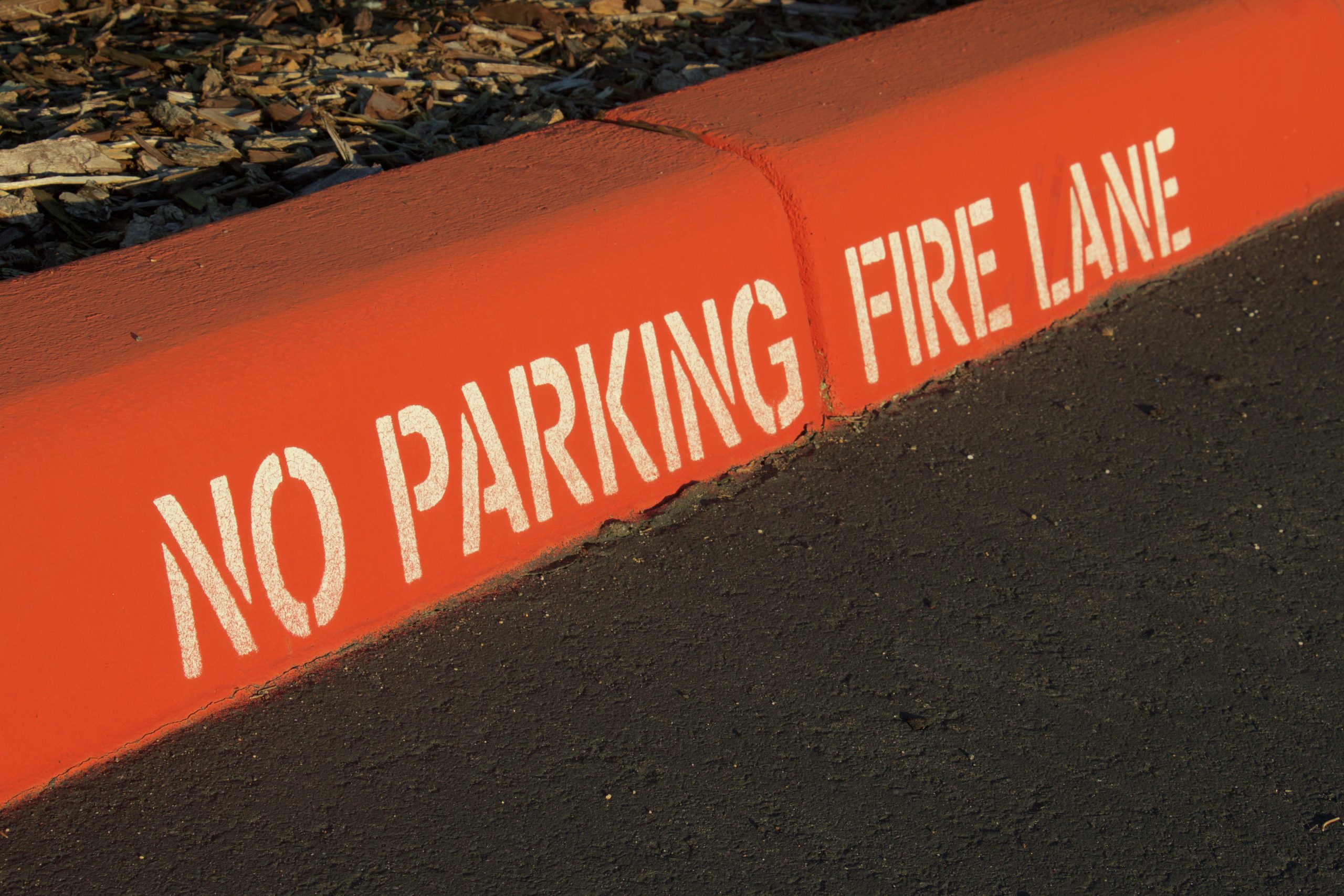
Most municipalities adopt standards from the International Fire Code, the National Fire Protection Association, or their own local ordinances. While exact requirements vary, common elements include a designated fire access road, a minimum clear width for apparatus, and continuous pavement marking and signage along the curb or edge of the lane. In many communities, fire lane curbs must be painted red with contrasting white or yellow lettering that reads “No Parking Fire Lane” at regular intervals. Entry points and ends of the lane are often marked with arrows or additional words for clarity. Signs are mounted at set heights and spacing so they are visible even when snowbanks or parked vehicles are nearby.
In Southeast Wisconsin, cities and villages publish detailed rules that dictate paint color, wording, letter size, and sign placement. Private property rules are enforced too. Shopping centers, hospitals, schools, multifamily communities, and office parks must maintain legible curb colors and stenciling. If you are unsure which code applies to your property, Asphalt Contractors can help interpret the requirements for Racine, Kenosha, Walworth, Waukesha, and Milwaukee counties and prepare a plan that passes inspection.
Are Your Red Zones Too Faded? How to Tell at a Glance
You should be able to read your fire lane markings from a reasonable distance during the day and see their outline in vehicle headlights at night. If that sounds uncertain, use this quick visual check:
- Stand 50 to 100 feet away and confirm you can read the full stencil wording without squinting.
- Check color contrast. The red field should look solid, not pink or patchy. The words should be a bright, uniform white or yellow.
- Inspect for flaking, peeling, or thin spots where asphalt or concrete shows through.
- Look for curb damage. Spalls or cracks break up the message and invite moisture under the coating.
- Check all transitions and ends of lanes. Missing arrows or words at entry points confuse drivers.
- Review signs. Bent poles, sun-faded faces, or missing signs can trigger a violation even if the paint looks fine.
- Walk the route at night. Headlights should pick up reflective beads or bright paint. If not, visibility is likely below code expectations.
- After winter, check for salt burn and plow scrape marks. Wisconsin winters are tough on every pavement marking.
Common Compliance Mistakes That Lead to Fines
- Faded red curb paint that reads more like pink or rust.
- Missing or partial “No Parking Fire Lane” stencils.
- Letter sizes that are too small for code.
- Sign spacing that exceeds local limits or signs mounted too low.
- Markings that stop short of the full required fire lane length.
- Snow storage placed on top of fire access or curb lettering.
- Oil stains or sealcoat obscuring wording after maintenance work.
- Mismatched colors after spot repairs that reduce visibility.
- No reflective media added in dark areas, garages, or private drives.
Pavement Marking Standards for Durable Fire Lanes
Color and Wording
Most codes require red curbs or red edge striping to signal a no-parking fire access lane. Wording typically reads “No Parking Fire Lane” or “Fire Lane No Parking” in a contrasting color so the message is unmistakable. Many municipalities specify letter height, stencil intervals, and arrow styles. Because rules vary by city and county, always confirm the exact size and spacing before you stripe. Asphalt Contractors reviews local standards before any fire lane project to avoid rework or delays.
Materials That Last in Wisconsin Weather
Not all paint performs the same in freeze-thaw cycles and heavy road salt. Choosing the right pavement marking system will reduce your long-term costs and limit touch-ups between winters. Common options include traffic-grade acrylic paint, which is budget friendly and cures quickly. It works well for routine refreshes but may need annual maintenance in high-traffic areas. Solvent-borne or waterborne epoxy offers a longer service life and better chemical resistance, making it a smart choice for curb faces and lanes exposed to snowplows and deicing salts. Methyl methacrylate, often called MMA, delivers excellent durability, bright color retention, and fast cure times. It is ideal when you want a multi-year solution on busy sites. Thermoplastic, often preformed or hot-applied, is durable on flat asphalt but less suited for vertical curbs. It performs well for lane edges and stenciled words on the pavement, and it can include glass beads for night visibility. Reflective glass beads or anti-skid additives can be broadcast into wet markings to improve nighttime visibility and traction. This is especially helpful by entrances, hospital drives, and loading zones that stay busy after dark.
Application Best Practices
Durability starts with preparation. Power washing or mechanically cleaning the curb and lane removes dust and salt that prevent bonding. Cracks, spalls, and loose edges should be repaired first. Moisture is a top cause of premature failure, so surfaces must be dry before coatings go down. Temperature and humidity matter. Professional crews track manufacturer limits and only apply material within the proper weather window. Even coverage is key. Following the specified film thickness and applying multiple coats where needed helps the color stay vibrant. Clear layout avoids confusion. Consistent stencil spacing, arrows at entries, and clean edges create a professional look and support enforcement by local authorities. Proper cure time protects your investment. Asphalt Contractors schedules work to reopen lanes as soon as safe while giving the material time to set. Night or off-hours service can limit disruption for your tenants and customers.
How Often to Refresh Fire Lane Pavement Marking
There is no one-size refresh cycle because weather, traffic, and materials all play a role. As a rule of thumb, traffic-grade paint may need attention every 12 to 24 months in Wisconsin, while epoxy or MMA can last longer before a full repaint. High-salt exposure, frequent plowing, and heavy truck traffic shorten service life. A quick spring inspection after the last freeze is the best way to set your schedule. If you can see fading, chips, or patchy wording, plan a refresh before summer.
Cost Factors and Smart Budgeting
Pricing for fire lane pavement marking depends on the length of curb or lane, the number of stencils and signs, surface condition, material type, number of mobilizations, and whether the work occurs at night or during business hours. Repairs like curb patching, crack filling, or grinding old coatings add cost but can extend the life of the new system. Our team at Asphalt Contractors Inc. manufactures our own asphalt and brings a full fleet of prep and striping equipment, which helps us control costs and deliver consistent quality. We provide clear, itemized proposals so you can compare short-term savings versus long-term durability. Often, upgrading to a higher-performance material reduces total cost of ownership by cutting down on re-striping frequency.
How Asphalt Contractors Inc. Keeps Properties Compliant
Asphalt Contractors has been serving Southeast Wisconsin since 1979. Our certified crews handle both asphalt and concrete, and our pavement marking specialists focus on safety-critical zones like fire lanes, crosswalks, and accessible routes. We know local codes, and we coordinate with property managers, HOAs, schools, healthcare facilities, and retail centers to plan efficient, code-ready work. From Union Grove to Milwaukee, we are known for reliable scheduling, crisp lines, and durable materials that stand up to Midwest weather.
Our 6-Step Fire Lane Refresh
- Site assessment and measurement. We walk every curb and lane to capture conditions and lengths.
- Code review and layout plan. We confirm local fire code requirements for color, wording, letter height, spacing, and sign placement.
- Surface preparation. We clean, repair minor curb damage, and remove loose or failing coatings to promote adhesion.
- Professional layout. We mark stencil locations and arrow directions so drivers get a clear message.
- Application with the right system. We select paint, epoxy, MMA, or thermoplastic to match your budget and durability goals. Reflective media is added as needed.
- Final quality check and documentation. We deliver photos, a layout diagram, and material specs so you can show proof of compliance.
Documentation You Can Hand Inspectors
Clear records help resolve questions fast. After your project, Asphalt Contractors can provide material data sheets, color references, stencil sizes, photos before and after work, and a diagram of lane limits and sign placements. If your municipality requires a letter of completion or maintenance plan, we prepare that too.
Fire Lane Pavement Marking and ADA: Avoid Conflicts
Fire lanes and accessible routes often sit near each other at main entrances. That makes coordination important. Keep these best practices in mind. Do not allow fire lane stencils or red curb paint to overlap the access aisle crosshatching by accessible spaces. Make sure there is a clear, unobstructed accessible route from parking to the entrance that is not confused with a fire lane. Confirm that signs for accessible parking and fire lanes are mounted at proper heights and do not block each other. Use consistent colors and clear separation so drivers know where they can stop for a drop-off versus where stopping is not allowed. Our team lays out both systems together so they support safety and pass inspection.
Seasonal Maintenance Tips for Property Managers
- Schedule a spring inspection after freeze-thaw to spot salt damage and plow scrapes.
- Keep curbs clean. Dirt and oil dull colors and hide wording.
- Trim vegetation that conceals signs or curb faces.
- Reposition snow storage away from fire lanes to keep access open.
- Touch up small chips early to stop peeling from spreading.
- When sealcoating drives or lots, mask fire lane edges so the sealer does not cover wording.
- Photograph conditions each season to track fading and plan refresh budgets.
Frequently Asked Questions
How bright do fire lane markings need to be?
Codes require markings to be clearly visible and legible. Inspectors look for strong color contrast and readable wording from a distance. Adding reflective media can improve nighttime visibility where lighting is limited.
Can I just repaint the worst spots?
Spot touch-ups may pass in the short term, but patchy colors and mismatched letters can still trigger warnings. A uniform refresh of the full fire lane is often the better choice, especially before a scheduled inspection.
How long will new pavement marking last?
In Wisconsin, traffic-grade paint often lasts 1 to 2 years in exposed areas. Epoxy and MMA systems can extend that window, especially on curbs. Snowplows, salt, and heavy traffic reduce service life. Asphalt Contractors recommends the best system for your site conditions and budget.
What if my municipality changes its rules?
Local codes can be updated, and sometimes letter sizes or spacing differ from place to place. Our team checks current standards before every project and can adjust layouts or stencils to match the latest requirements.
Do I need new signs if I refresh the paint?
If signs are faded, mounted too low, or spaced too far apart, you should replace or reposition them. Fresh paint plus outdated signs can still lead to a citation. We can handle both pavement marking and sign installation so everything aligns with code.
Why Choose Asphalt Contractors Inc. for Fire Lane Compliance
Asphalt Contractors brings more than four decades of paving and pavement marking experience to every job. Our crews use top-tier equipment, follow manufacturer specs, and work during off-hours to limit disruption to your tenants, patients, or shoppers. Because we manufacture our own asphalt, we can also repair curb and surface issues quickly, then follow with durable striping that stands up to the elements. From layout to final photos, we treat your compliance as a priority and your schedule as our guide.
Schedule a Fast Compliance Refresh Today
If your red zones are looking tired or an inspection is on the calendar, now is the time to act. A quick assessment from Asphalt Contractors will show exactly what you need to meet code, reduce risk, and keep emergency access clear. We serve Racine, Kenosha, Walworth, Waukesha, and Milwaukee counties, and we can mobilize quickly for retail centers, schools, industrial sites, healthcare campuses, and residential communities. Contact Asphalt Contractors Inc. to schedule a walk-through, get a clear proposal, and bring your fire lane pavement marking back to bright, code-ready condition.
Your property deserves markings that protect people and pass inspection the first time. Keep emergency access obvious, keep fines off your desk, and keep your team focused on business. With Asphalt Contractors, compliance is simple, fast, and built to last.