Choosing between concrete and asphalt for heavy-use areas is a big decision. The right surface can reduce downtime, save money, and improve safety. This concrete vs asphalt checklist helps you compare durability, cost, maintenance, and performance so you can make a confident choice. Whether you manage a trucking yard, a warehouse lot, a bus lane, or a high-traffic commercial site, the guidance below will help you plan a pavement that lasts.
Why a Concrete vs Asphalt Checklist Matters
Heavy-use areas face constant stress from trucks, forklifts, buses, and snow removal equipment. These areas need a pavement that matches load demands and climate. Without a checklist, it is easy to overlook details like subgrade support, drainage, winter performance, or downtime during construction. A structured concrete vs asphalt checklist helps you weigh the tradeoffs, calculate lifecycle costs, and schedule maintenance ahead of time. It also gives you clear talking points when working with a contractor.
At-a-Glance Comparison for Heavy-Use Areas
- Durability: Concrete resists deformation under very heavy static loads. Asphalt handles dynamic loads well and can be engineered to resist rutting with the right mix and thickness.
- Construction Speed: Asphalt can often be placed and opened to traffic faster. Concrete needs curing time but may offer longer intervals between major rehabilitation.
- Cold Climate Performance: Asphalt can flex with temperature shifts but may rut under heavy loads if underdesigned. Concrete resists rutting but needs proper joints and air content to survive freeze-thaw cycles.
- Maintenance: Asphalt maintenance is usually quicker and less expensive per visit. Concrete maintenance is less frequent but may cost more when needed.
- Lifecycle Cost: Depends on loads, climate, and maintenance discipline. Properly designed asphalt can match or beat concrete lifecycle costs for many heavy-use sites. Properly designed concrete can excel in high static load areas like loading docks.
- Surface Texture and Safety: Both surfaces can be textured for traction. Concrete is bright and reflective. Asphalt provides strong contrast for striping and smooth plowability when maintained.
- Recycling: Asphalt is one of the most recycled materials in the U.S. Concrete can be crushed and reused as base or fill.
The Concrete vs Asphalt Checklist for Heavy-Use Areas
Define Traffic and Loads
- List vehicle types: semi-trailers, buses, forklifts, delivery trucks, emergency vehicles.
- Estimate daily equivalent single axle loads.
- Note turning, braking, and standing areas where stress concentrates.
Map Heavy-Use Zones
- Loading docks and staging lanes.
- Trash enclosure paths and compactor pads.
- Fueling areas and maintenance bays.
- Drive-through lanes with tight radii.
Assess Soil and Subgrade
- Order geotechnical testing for soil strength and moisture.
- Plan stabilization if soils are weak or wet.
- Set compaction standards and proof-rolling steps.
Plan Drainage and Base Support
- Design positive surface slope to inlets and swales.
- Use free-draining base and edge details to limit water intrusion.
- Protect subgrade during construction to avoid pumping and soft spots.
Choose Pavement Type for Each Zone
- Concrete for heavy static loads and tight turning at dock aprons.
- Asphalt for main drive aisles, parking fields, and areas where fast reopening matters.
- Consider composite solutions that combine both.
Set Thickness and Mix/Strength
- Asphalt: specify high-stability, rut-resistant mixes and sufficient thickness for traffic class.
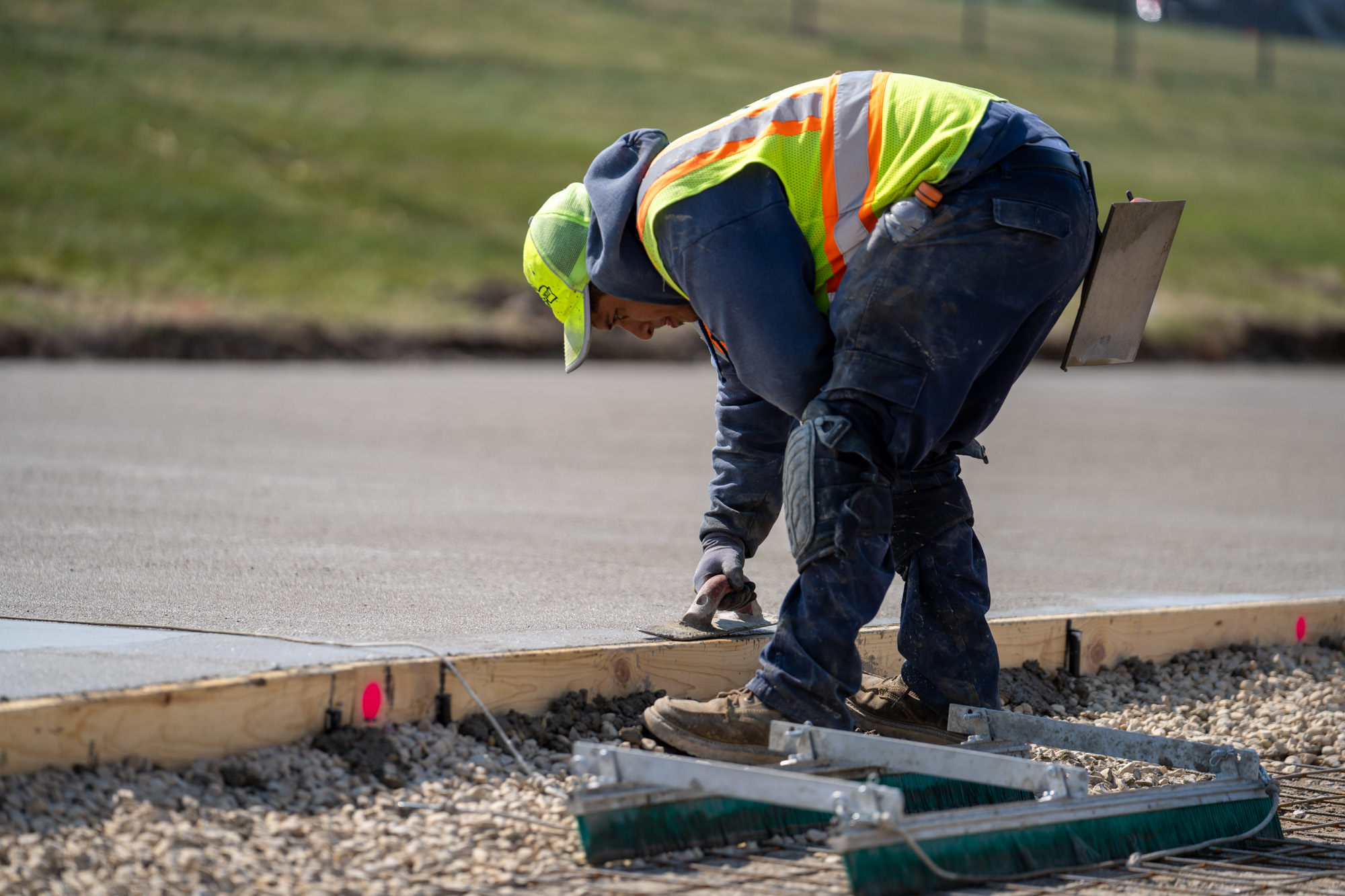
- Concrete: specify correct compressive strength, air content, joint spacing, and dowels where needed.
Plan Construction Phasing and Downtime
- Identify areas that must stay open.
- Sequence work to maintain operations.
- Account for concrete cure time or asphalt cooling before opening to traffic.
Account for Climate and Winter Care
- Detail deicing practices and salt exposure.
- Specify freeze-thaw durable concrete mix with air entrainment.
- Use asphalt binders suited for local temperature ranges.
Surface Texture and Safety
- Choose texture that balances traction and plowability.
- Plan striping layout for clear traffic flow.
- Add concrete or thicker asphalt at stop-and-go points.
Oil, Fuel, and Chemical Resistance
- Use dense, well-compacted asphalt and seal susceptible areas.
- Use concrete with low permeability and proper curing to resist staining.
- Plan spill response procedures.
Maintenance Schedule
- Asphalt: routine crack sealing, sealcoat cycles, and overlays as needed.
- Concrete: joint sealing, periodic slab stabilization or diamond grinding.
- Budget for preventive work every year.
Lifecycle Cost Analysis
- Compare initial cost, maintenance, and downtime.
- Include the value of faster reopening with asphalt in operating costs.
- Model 20 to 30 years to see the true picture.
ADA and Compliance
- Verify slopes, cross slopes, and transitions.
- Ensure accessible routes remain stable and smooth.
Quality Assurance
- Set testing requirements for density, strength, and smoothness.
- Require certified crews and documented mix tickets.
Closeout and As-Builts
- Collect test reports and thickness measurements.
- Create a maintenance log and schedule for year one.
Key Factors Explained
Durability and Structural Strength
Both materials can support heavy use when designed correctly. Concrete shines under static loads and slow, tight turning. Its rigid structure spreads loads over a wide area. Asphalt is flexible. It performs well under dynamic loads and can be crafted with polymer-modified binders to resist rutting. For loading docks, many owners choose concrete pads tied to a high-quality asphalt yard. For bus lanes and warehouse aisles, a thick, stable asphalt section with a strong base can offer excellent durability.
Load Capacity and Thickness
For asphalt, thickness and mix selection are critical. A thin section may rut. A thicker section with a stable base supports axle loads for years. For concrete, compressive strength, proper joints, dowels, and base uniformity keep slabs stable. Your contractor should use traffic projections to set thickness by engineering standards rather than rules of thumb.
Climate and Freeze-Thaw Performance
In Southeast Wisconsin, freeze-thaw cycles, snow removal, and deicing salts are major factors. Asphalt must be designed with the correct binder grade to handle temperature changes. Concrete needs air entrainment, proper curing, and sealed joints to resist freeze-thaw damage. Drainage is nonnegotiable for both because trapped water leads to heaving, potholes, or slab movement.
Construction Speed and Downtime
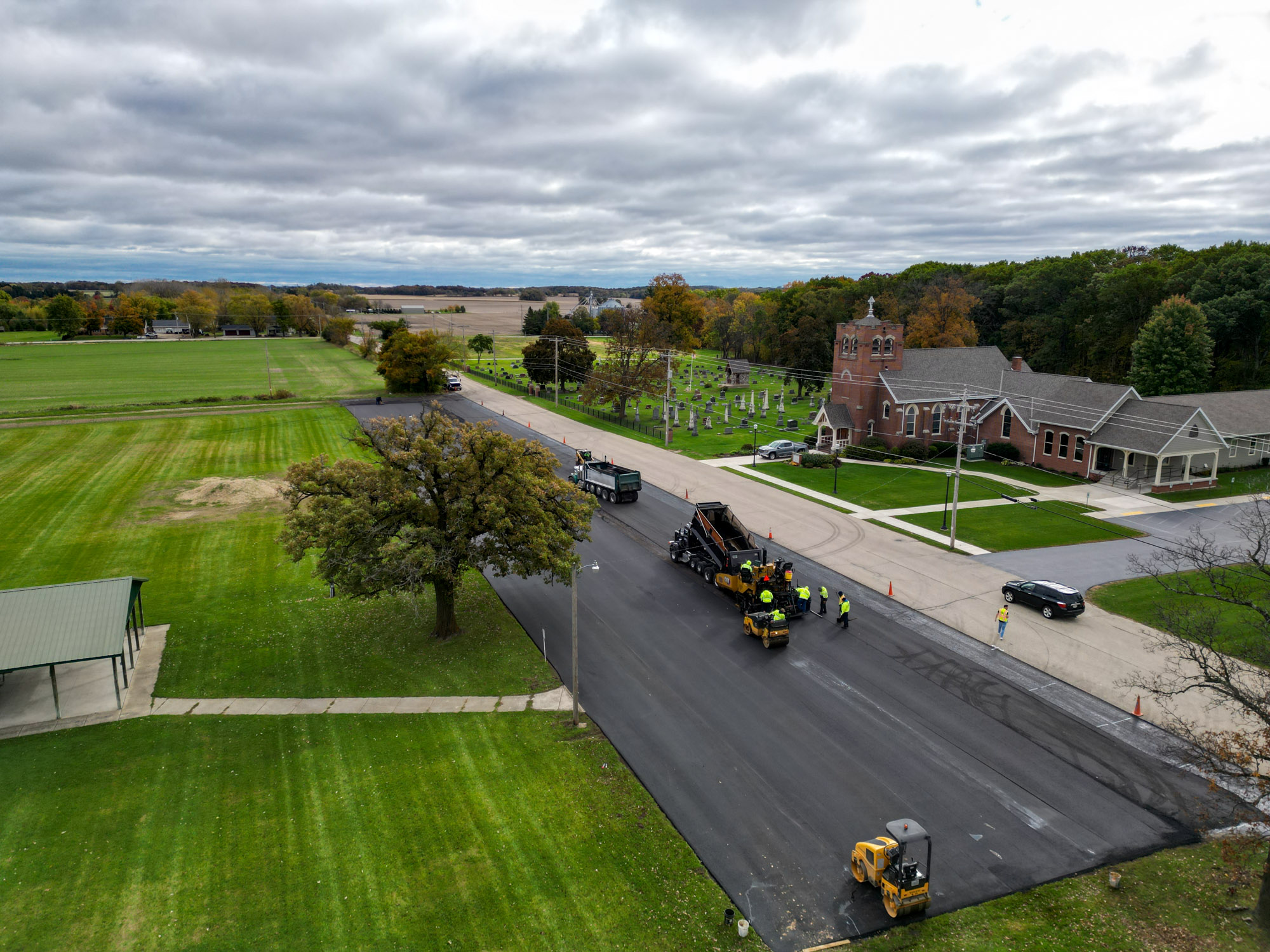
Asphalt construction is often faster. Large areas can be milled and repaved overnight or over a weekend, which keeps businesses operating. Concrete may require several days of curing before it can accept heavy traffic. If your site must stay open, phasing with asphalt can be a strong advantage. Some owners mix materials to balance speed and durability by using concrete in the heaviest stress zones only.
Surface Performance and Safety
Both materials can deliver excellent traction. Concrete’s lighter color may improve nighttime visibility. Asphalt provides strong contrast for pavement markings. For winter plowing, both surfaces work well when smooth and properly maintained. Joint layout matters for concrete to limit slab movement. Asphalt needs timely crack sealing to keep water out. Good striping and clear signage help drivers navigate safely under high load and high volume conditions.
Maintenance and Rehabilitation
Asphalt maintenance is predictable and can be done in short windows. Crack sealing, patching, and periodic overlays can restore smoothness and extend life with minimal disruption. Concrete maintenance is less frequent but can involve slab replacement or grinding. Well-placed joints and dowels reduce long-term issues. In either case, small repairs done early prevent bigger fixes later.
Initial Cost vs Lifecycle Cost
Asphalt often comes with a lower upfront cost and faster reopening, which lowers business interruption. Concrete may cost more upfront but can offer longer intervals between major rehabilitation in certain zones. The best choice depends on the traffic type, subgrade support, and how disciplined you are with maintenance. A lifecycle analysis that includes maintenance and downtime is the most accurate way to compare.
Sustainability and Recycling
Asphalt is one of the most recycled materials in the country. Recycled asphalt pavement can be processed into new mixes while maintaining quality. Concrete can be crushed and reused as aggregate base. Designing for longevity is also sustainable. Less frequent reconstruction means less material use and less disruption over the life of your site.
Aesthetics and Property Value
Concrete’s bright surface can look clean and high-end near storefronts and entryways. Asphalt delivers a uniform, dark finish that highlights striping and looks sharp after sealcoating. Many facilities combine the two so each area is optimized for performance and appearance.
Real-World Applications in Southeast Wisconsin
- Industrial yards and freight hubs: asphalt main lanes for speed of repair, concrete dock aprons for static load resistance.
- Municipal bus lanes and school drop-off zones: rut-resistant asphalt mixes with adequate thickness for heavy wheel paths.
- Grocery and retail lots: asphalt for parking fields and drive aisles, concrete pads at cart corrals and dumpster routes.
- Distribution centers: stabilized base and thick asphalt sections to control rutting, concrete in tight-turn zones.
- Farm and agricultural sites: asphalt for drive lanes and equipment paths, concrete at fuel pads and high-load stationary areas.
Common Mistakes to Avoid
- Undersizing thickness to cut costs. Savings vanish when rutting or cracking appears early.
- Ignoring drainage. Water is the enemy of all pavements.
- Skipping geotechnical testing. Unknown subgrade conditions lead to failures.
- Using the same pavement type everywhere instead of zoning by load.
- Delaying maintenance. Small cracks become big repairs if left open to water and winter cycles.
FAQs: Concrete vs Asphalt for Heavy-Use Areas
Which lasts longer for heavy trucks?
Both can last a long time when designed correctly. Concrete often excels in static load areas. Asphalt can match performance with the right mix and thickness, plus timely maintenance. The best answer depends on your traffic pattern and subgrade.
Which is faster to install?
Asphalt usually installs and reopens faster. Concrete needs curing time, though it can deliver long service intervals. If downtime is critical, asphalt phasing often wins.
How do winters affect each surface?
Freeze-thaw cycles affect both. Asphalt should use a binder suited to local temperatures. Concrete should use air entrainment, proper curing, and joint sealing. Good drainage is key for both.
Is a hybrid approach worth it?
Yes. Many facilities use concrete at loading docks and heavy turning points and asphalt in traffic lanes and parking fields. This approach balances performance and cost.
How soon should I plan maintenance?
Create a year-one plan before construction ends. Schedule inspections, crack sealing, and cleaning. Preventive maintenance protects your investment and avoids major repairs.
About Asphalt Contractors
Asphalt Contractors Inc., established in 1979, is a full-service paving contractor based in Union Grove, Wisconsin. We serve Southeast Wisconsin, including Racine, Kenosha, Walworth, Waukesha, and Milwaukee counties. Asphalt Contractors provides asphalt paving, maintenance, milling and pulverizing, concrete construction, site preparation, asphalt manufacturing, specialty services, and crushing. By manufacturing our own asphalt, Asphalt Contractors controls quality and helps clients save on cost. Our certified crews use top-tier equipment to deliver reliable results on schedule.
How Asphalt Contractors Uses the Checklist
Our team uses a detailed concrete vs asphalt checklist on every heavy-use project. Asphalt Contractors starts with traffic studies and soil testing, then designs a pavement structure that fits your goals. We often recommend a mixed solution: concrete where static loads are highest and asphalt where fast reopening and future overlays will keep your site running. Because Asphalt Contractors manufactures asphalt, we can dial in mixes for rut resistance, durability, and seasonal performance. For concrete work, we specify the right strength, air content, and joint layout to match Wisconsin winters.
Your Step-by-Step Plan
Gather Site Data
- Traffic counts, vehicle types, heaviest axle loads, and turning paths.
- Existing pavement conditions, drainage issues, and subgrade history.
Schedule a Pavement Assessment
- Asphalt Contractors will walk the site, take measurements, and recommend testing.
Compare Options with the Checklist
- Run initial cost and lifecycle scenarios for asphalt, concrete, or a hybrid plan.
Finalize Design and Phasing
- Choose thickness, mix or strength, and sequence work to keep operations flowing.
Build with Quality Controls
- Asphalt Contractors documents compaction, strength, smoothness, and material quality.
Launch Maintenance Program
- Set inspection intervals, crack sealing, and budget forecasting from day one.
Download the Concrete vs Asphalt Checklist
Make your decision easier with a simple tool you can share with your team. Download the concrete vs asphalt checklist to compare durability, cost, maintenance, and downtime for every area of your site. Use it to score each option side by side, then choose with confidence.
Talk to Asphalt Contractors
When you are ready to plan or upgrade a heavy-use area, Asphalt Contractors is here to help. We combine four decades of experience with in-house asphalt manufacturing and full-service concrete capabilities. From dock aprons to bus lanes to full parking lots, our experts design and build pavements that stand up to real-world demands. Contact Asphalt Contractors to request the concrete vs asphalt checklist and get a custom quote for your site. We will help you compare options, model lifecycle costs, and schedule work to minimize downtime. Make the right choice for your property and keep your operations moving all year long.