Why ADA Compliance Starts With Parking Lot Striping
Parking lot striping is key to ADA compliance. Learn space counts, signage, and layout in our quick guide so you can avoid fines and protect your guests. If you own or manage a property, the parking lot is one of the first places people judge your business. Clear, durable striping and correctly placed signs make access simple for everyone and keep you in line with federal rules. This guide walks you through what to check, common mistakes to avoid, and how Asphalt Contractors can help you get compliant fast.
Asphalt Contractors Inc. is a full-service paving contractor based in Union Grove, Wisconsin. Since 1979 our team has delivered asphalt and concrete solutions across Southeast Wisconsin. We manufacture our own asphalt, which helps control quality and cost. That matters when you are planning ADA upgrades, parking lot striping, or full resurfacing. With certified experts and top equipment, Asphalt Contractors completes work efficiently while keeping your lot open and safe for customers.
What the ADA Requires in Accessible Parking
How many accessible spaces you need
The 2010 ADA Standards for Accessible Design spell out how many accessible spaces your lot needs. The count is based on the total number of spaces in each parking facility. A garage, surface lot, or separate area on the same site is treated as its own facility. Here is the minimum number of accessible spaces per facility:
- 1 to 25 total spaces: at least 1 accessible space
- 26 to 50 total spaces: at least 2 accessible spaces
- 51 to 75 total spaces: at least 3 accessible spaces
- 76 to 100 total spaces: at least 4 accessible spaces
- 101 to 150 total spaces: at least 5 accessible spaces
- 151 to 200 total spaces: at least 6 accessible spaces
- 201 to 300 total spaces: at least 7 accessible spaces
- 301 to 400 total spaces: at least 8 accessible spaces
- 401 to 500 total spaces: at least 9 accessible spaces
- 501 to 1000 total spaces: 2 percent of total spaces
- 1001 or more total spaces: 20 plus 1 more for each 100 over 1000
At least one of every six accessible spaces must be van accessible, and every facility must have at least one van accessible space. If medical facilities serve outpatients or rehabilitation patients, higher ratios may apply. Multifamily housing and government properties may have additional rules. Always pair ADA requirements with your local code and state rules before finalizing parking lot striping.
Dimensions and layout basics
ADA compliance is about more than the blue symbol. Your spaces and aisles must be the right size, have the right slope, and connect to an accessible route. These are the key layout targets your striping plan should hit:
- Car accessible spaces: 8 feet wide minimum with an adjacent access aisle 5 feet wide minimum. Or 11 feet wide with a 5 foot aisle.
- Van accessible spaces: 8 feet wide minimum with an adjacent access aisle 8 feet wide minimum. Or 11 feet wide with a 5 foot aisle.
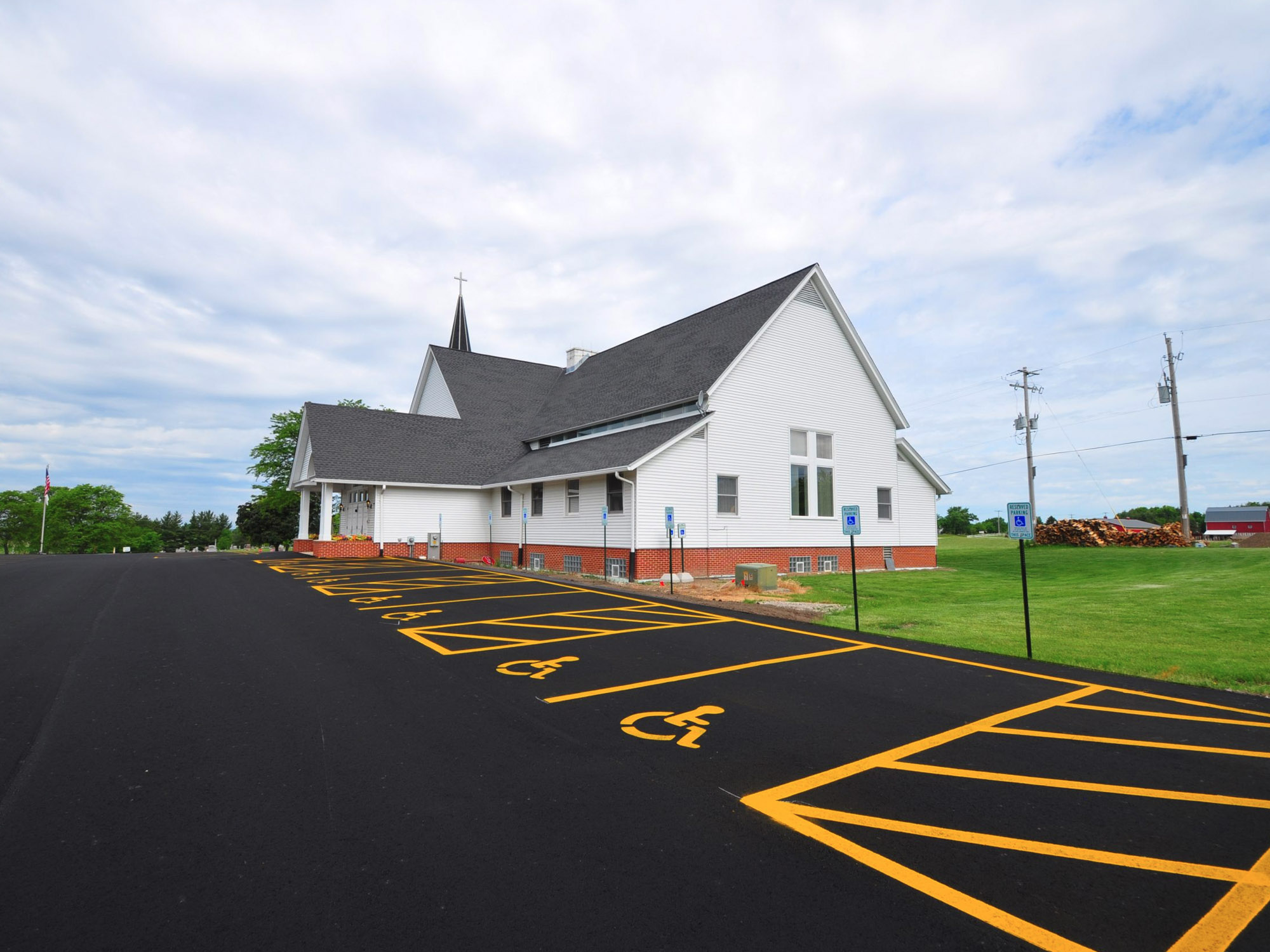
- Access aisles: Marked to discourage parking. Aisles must adjoin the accessible route and be the same length as the parking space.
- Surface slope: No steeper than 1:48 in any direction. That is about 2.08 percent. Slopes beyond this require paving corrections, not just new paint.
- Vertical clearance: 98 inches minimum at van accessible spaces and along the vehicle route to those spaces.
- Accessible route: Firm, stable, and slip resistant. Minimum 36 inches wide with no steps or abrupt level changes. Connects the access aisle to the accessible entrance.
- Curb ramps: Place them so they do not project into accessible parking spaces or access aisles. The aisle must stay clear and level.
Accurate layout comes before paint. If you are not sure your current geometry meets the standards, Asphalt Contractors can measure, redesign, and restripe to keep you compliant.
Signage and pavement markings
Signs and markings guide drivers and help enforce proper use. The ADA requires permanent signs at accessible spaces, and many states add details on symbols and striping color. Follow these best practices when planning your parking lot striping and signage:
- Signage for every accessible space: Use the International Symbol of Accessibility on a sign mounted at least 60 inches above the ground measured to the bottom of the sign. This prevents the sign from being blocked by parked vehicles.
- Van accessible sign: Add a separate sign that says Van Accessible at each van space.
- Pavement stencils: Many jurisdictions require the symbol of accessibility on the pavement within the space. Check local code for size and color standards.
- Color and contrast: Use high contrast paint so symbols and access aisles stand out. White symbol on blue field is common, but confirm local rules.
- Reflectivity: Consider glass beads or reflective tape on signs and pavement to improve nighttime visibility.
- No parking in the aisle: Stripe diagonal hatching and add No Parking where allowed by code to keep aisles clear.
Asphalt Contractors sources and installs code compliant signage and provides professional parking lot striping with durable paint systems built for Wisconsin weather.
Location and route to the entrance
Where you place spaces matters. The ADA requires accessible parking on the shortest accessible route to the accessible building entrance. For sites with multiple buildings, entrances, or lots, distribute accessible spaces to serve each area:
- Place accessible spaces close to the accessible entrance they serve. Avoid steep routes or long detours.
- Provide accessible parking in each parking facility on a site, not just one lot far from an entrance.
- For multiple entrances, distribute spaces near the accessible entrances where parking is provided.
- Keep routes free of steps, high thresholds, or narrow choke points. Watch for door swings that cut into the route.
- Do not place curb ramps in the middle of access aisles. Keep the aisle level and connect it to the ramp without steep transitions.
Common ADA Mistakes We See During Parking Lot Striping
Small errors can put a lot out of compliance. During ADA upgrades and parking lot striping, Asphalt Contractors often finds the same issues:
- Access aisles too narrow or too short for the full length of the space
- Van spaces without the required Van Accessible sign
- Signs mounted too low or attached to wheel stops instead of posts
- Excessive slope in the space or aisle that cannot be fixed with paint
- Curb ramps projecting into the access aisle
- Pavement markings that fade fast due to low quality paint or poor prep
- Blue symbols placed without considering local color rules
- Wheel stops intruding into aisles or blocking the accessible route
- Snow piled in accessible spaces during winter
- Accessible spaces not located on the shortest accessible route
These mistakes are avoidable with careful planning, correct measurements, and professional execution. When needed, Asphalt Contractors can mill and repave to correct slopes, add or adjust curb ramps, and then complete fresh parking lot striping and signage.
How to Audit Your Lot in 30 Minutes
You can complete a quick field check with a tape measure, a level app on your phone, and a notepad. Here is a simple process:
- Count total spaces in each separate facility, including on-street private stalls, surface lots, and garages.
- Use the ADA counts to verify the correct number of accessible and van accessible spaces.
- Measure widths. Car accessible spaces should be at least 8 feet wide with a 5 foot aisle, or 11 feet with a 5 foot aisle. Van spaces should be at least 8 feet with an 8 foot aisle, or 11 feet with a 5 foot aisle.
- Check slopes. Place your level on the parking surface and the access aisle. Anything over 2 percent in any direction may require paving adjustments.
- Verify sign height. Bottom of the accessible sign at or above 60 inches. Confirm Van Accessible signage at each van space.
- Inspect the accessible route. The path from the access aisle to the entrance must be firm, stable, slip resistant, and at least 36 inches wide, with no steps.
- Examine curb ramps. Ensure ramps do not project into the parking space or aisle and that transitions are smooth.
- Confirm markings. Symbols are clear and aisles are hatched. No parking text added where allowed by code.
- Look for obstructions. Wheel stops, posts, landscaping, or snow must not block the route or aisle.
- Document issues and plan fixes. For striping only problems, schedule parking lot striping. For slope or layout problems, consult Asphalt Contractors for a paving or concrete solution.
Design Tips for Easy to Maintain Striping
Good design helps your striping last longer, makes winter maintenance easier, and keeps your guests safe. Consider these tips before you paint:
- Choose durable materials. In Wisconsin, waterborne acrylic with high solids or thermoplastic for high traffic areas can extend service life. Add glass beads for nighttime visibility.
- Prep the surface. Clean, dry pavement improves adhesion. After sealcoating or overlays, always complete fresh parking lot striping.
- Plan for snow management. Align access aisles away from plow pile zones. Mark spaces with tall signs so they remain visible in winter.
- Use clear stencils. Consistent symbol sizes and crisp hatch angles improve readability and enforcement.
- Keep aisles straight. Simple layouts are easier to maintain and restripe on future visits.
- Mind drainage. Do not place accessible spaces where water ponds. Poor drainage increases slip hazards and damages paint.
- Coordinate with tenants. Schedule work during off hours to reduce disruption and allow proper dry time.
When Restriping Is Not Enough
Some lots cannot be fixed with paint. If slopes exceed ADA limits, if pavement is failing, or if a new curb ramp is needed, you will need paving or concrete work. Asphalt Contractors offers milling and pulverizing to correct grades, new asphalt paving to create level spaces and aisles, and concrete construction for compliant curb ramps and sidewalks. Because we manufacture our own asphalt, we control mix quality and can deliver cost effective fixes on tight timelines. Once grades are corrected, we complete new parking lot striping and install signs so your site meets ADA standards from the ground up.
Why Choose Asphalt Contractors for ADA Upgrades in Southeast Wisconsin
Asphalt Contractors Inc. has served Racine, Kenosha, Walworth, Waukesha, and Milwaukee counties since 1979. Our team combines paving, concrete, site preparation, and parking lot striping under one roof. That means one contractor can handle your assessment, design, layout, paving corrections, striping, and signage. With certified pros and top equipment, we finish on schedule and to high standards.
- Local expertise. We understand ADA standards and how local codes apply across Southeast Wisconsin.
- One stop service. Asphalt paving, milling, concrete ramps, sealcoating, parking lot striping, and signs from a single partner.
- Quality control. We manufacture our own asphalt to ensure consistent quality and value.
- Minimal downtime. We work nights or weekends when needed and stage work to keep access open.
- Clear pricing. Detailed proposals with options for restriping or full grade corrections.
- Long term care. Maintenance plans that include routine inspections and scheduled restriping.
Whether you manage a retail plaza, medical office, school, industrial site, or multifamily property, Asphalt Contractors can bring your lot into compliance and keep it there.
FAQ: ADA Parking and Striping
How often should I schedule parking lot striping?
Most properties restripe every 18 to 36 months. High traffic sites or lots that endure heavy snow operations may need annual touch ups. If lines or symbols are hard to read in daylight or at night, it is time to refresh. After any sealcoat or overlay, always schedule new parking lot striping and reinstall symbols and legends.
What paint colors are required for accessible spaces?
The ADA does not mandate specific colors for pavement markings. Many states and municipalities expect a blue background and white symbol in accessible spaces. Always check local code. Asphalt Contractors follows local standards and uses high contrast colors and reflective beads for visibility.
Do I need accessible parking at each entrance?
You must provide accessible parking in each parking facility on a site and place spaces on the shortest accessible route to accessible entrances. For multiple entrances that serve different areas, distribute accessible spaces near the entrances they serve.
Who must comply with the ADA parking requirements?
Most public accommodations and commercial facilities must comply. New construction and major alterations must meet current standards. Existing facilities must remove barriers when it is readily achievable. If you lease space, both the tenant and property owner share responsibility. When in doubt, plan upgrades and parking lot striping that meet current standards.
What happens if my lot is not compliant?
Noncompliance can lead to fines, lawsuits, and costly last minute repairs. It can also create safety hazards and poor customer experiences. Proactive maintenance and correct parking lot striping cost far less than emergency fixes. Asphalt Contractors can assess your lot, provide a practical plan, and complete improvements quickly.
Get a Free ADA Parking Lot Assessment
If you are unsure about your counts, layout, or signage, schedule a free walk through with Asphalt Contractors. Our team will measure your spaces and aisles, check slopes, review signs, and design a plan that meets ADA standards and local code. We handle repairs, paving, concrete, and parking lot striping across Southeast Wisconsin, including Racine, Kenosha, Walworth, Waukesha, and Milwaukee counties.
From quick restriping to full grade corrections, Asphalt Contractors delivers durable, readable markings and code compliant signage. Protect your guests, reduce risk, and present a professional, welcoming site. Contact Asphalt Contractors today to get your parking lot ADA compliant and keep it that way.