Parking lot drainage problems cause standing water to freeze and damage your lot. Learn why it happens and how to fix it, then schedule an expert assessment today. If your pavement is holding water after storms or snowmelt, it is more than a nuisance. It is a warning sign that your parking lot is at risk of cracking, potholes, heaving, and liability from ice. In Southeast Wisconsin, freeze and thaw cycles magnify the damage. The good news is you can correct the issue with proper design, maintenance, and expert repairs from Asphalt Contractors.
Why Standing Water Forms on Parking Lots
Every parking lot is designed to move water off the surface and into a storm system or a landscaped area. When that flow is disrupted, water pools. Once temperatures drop, those shallow puddles turn to ice and the damage accelerates. Here are the most common reasons parking lot drainage fails.
Insufficient Slope and Grading
Pavement needs a slight slope so gravity can move water to drains or edges. Over time, traffic loads and settlement can flatten the surface. If the original grading was minimal, even a small amount of wear may stop flow. Areas near entrances, dumpster pads, and loading zones are especially vulnerable because they carry heavy loads and tend to settle faster.
Clogged or Undersized Drains and Basins
Leaves, sand, and winter debris clog catch basins and trench drains. If the grate is blocked, water spreads across the surface instead of entering the system. Some older lots also rely on small basins that cannot handle intense storms. When the drain cannot keep up, you get standing water that freezes into slick sheets of ice.
Settling Subbase and Potholes
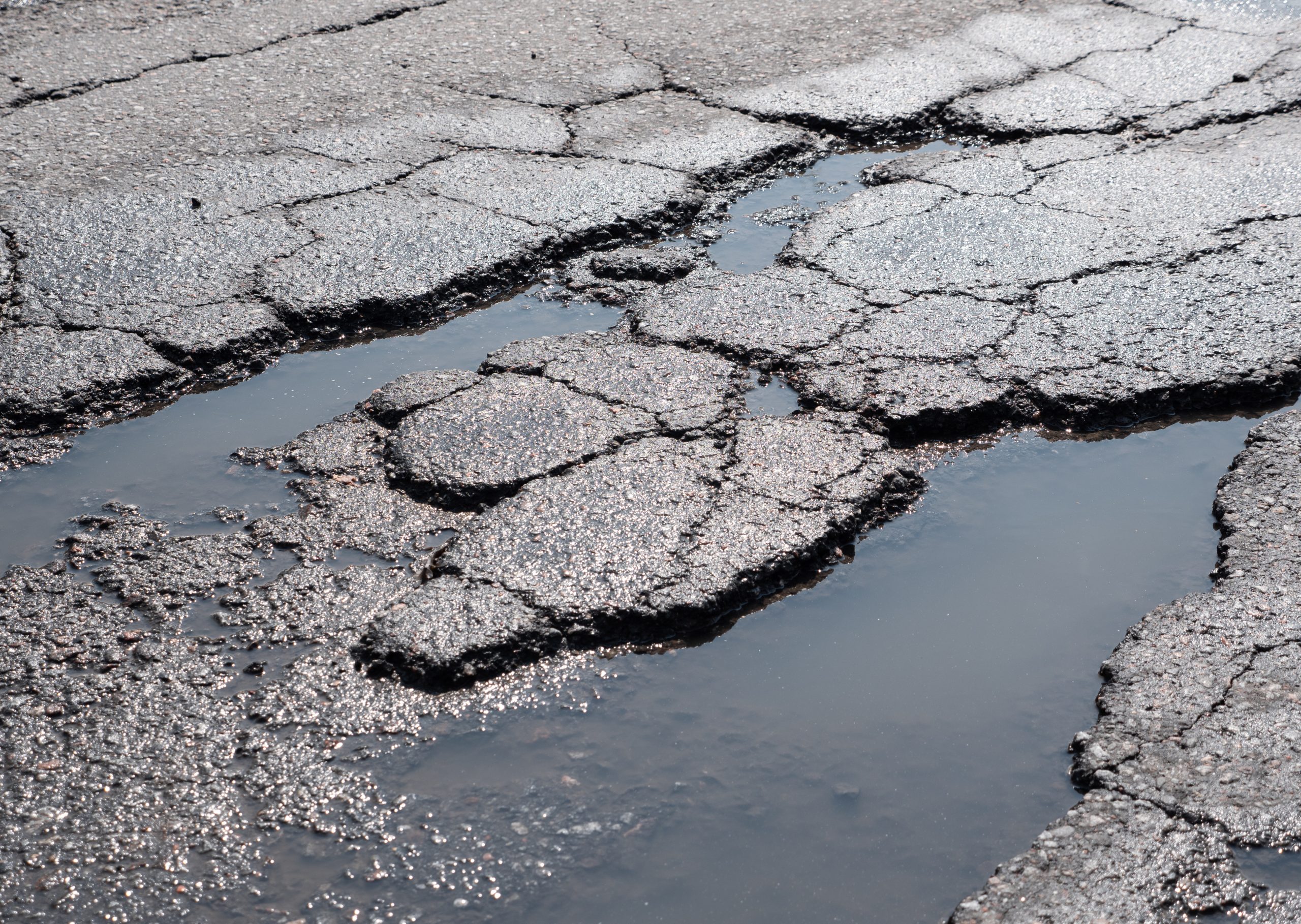
Asphalt relies on a strong base. If the stone base shifts or erodes, the surface dips. These shallow bowls collect water. In winter, those puddles freeze and expand, which forces the asphalt to lift and crack. Repeated cycles widen the dip and produce potholes. Concrete slabs can also settle and create uneven joints that hold water.
Edge Barriers and Landscaping Issues
Curbs, berms, and raised landscaping beds sometimes trap water on the pavement instead of guiding it away. Mulch and soil can wash across the lot and block low points. Overgrown grass can hide drain inlets or keep water from reaching the gutter. Thoughtful landscape grading and regular maintenance help keep water moving.
Snow Management That Creates Dams
Snow piles left in low areas or pushed over drains act like dams when they melt. The meltwater has nowhere to go and refreezes overnight. Ice builds and spreads across drive lanes and pedestrian routes. Coordinating plowing patterns with your drainage plan is a simple way to reduce refreeze risk.
Poorly Placed Downspouts and Roof Runoff
Roof drains that discharge onto the pavement send concentrated water to a small area. In winter that water runs across cold asphalt and becomes ice. Redirecting downspouts to underground connections or landscaped swales keeps runoff away from high traffic zones.
How Freezing Water Destroys Pavement
Water is the number one enemy of asphalt and concrete. When it freezes, it expands. That expansion exerts pressure on the pavement and the base layers. Over time, even a small amount of trapped water can cause major damage.
The Freeze Thaw Cycle Explained
During the day, sunlight and traffic warm the surface and melt ice. Water seeps into tiny cracks and voids. At night, temperatures drop and that water freezes. When water turns to ice, it expands. The ice pushes on the pavement, widening cracks and loosening aggregate. Repeat this process many times each winter and the pavement loses strength.
Damage to Asphalt and Concrete
Asphalt softens in warm weather and becomes brittle in cold weather. Freeze thaw cycles make both conditions worse. The result is raveling, alligator cracking, and potholes. Concrete fares better in some ways but is still vulnerable to joint damage, spalling at the surface, and heaving where water gets under slabs. Deicing salt can also speed surface wear if water is not draining.
Safety Hazards and Liability
Standing water becomes black ice that people cannot see. Slip and fall incidents rise near building entrances, crosswalks, and ADA routes. Vehicles lose traction and can slide near stop signs or dock areas. Poor parking lot drainage is not only a maintenance cost. It is a real safety issue that can lead to claims and downtime.
Signs You Have a Drainage Problem
You do not need specialized tools to spot trouble. Regular walkthroughs after rain or a thaw will reveal patterns. If any of the following applies to your site, it is time to act.
- Puddles that remain more than 24 hours after rain ends
- Water flowing toward building entrances or dock doors
- Ice sheets forming in the same areas each winter
- Silt or mulch deposits on the pavement after storms
- Surface depressions or ripples where trucks turn or park
- Clogged or sunken catch basins and cracked drain grates
- Efflorescence or dampness along concrete joints
- Early spring potholes in areas that held water all winter
Professional Parking Lot Drainage Assessment
A proper solution starts with a careful assessment. Asphalt Contractors Inc. has been diagnosing and fixing drainage issues since 1979. Our team knows how Wisconsin weather and soil conditions affect pavement performance, and we design fixes that last.
What Asphalt Contractors Inc. Looks For
We begin with a visual inspection of your lot including curbs, basins, and adjacent landscaping. We evaluate traffic patterns, loading zones, and snow storage practices. Then we check grades and flow paths to see how water moves. If needed, we examine the base condition in problem areas and inspect underground structures.
Tools and Testing Methods
For accuracy, our crews may use laser levels to verify slopes, straightedges to measure ponding depth, and core sampling to check base thickness and moisture. We also evaluate the condition of your asphalt binder, surface texture, and existing cracks. These details help us recommend the right mix of repairs and drainage upgrades.
The Cost of Waiting vs Acting Now
Delaying drainage repairs almost always costs more. Small puddles become potholes that require full depth patching. Frequent freeze thaw cycles widen cracks and let more water reach the base. Proactive work like regrading a low spot or clearing and adjusting a basin is far less expensive than rebuilding a failed section next year.
Effective Solutions for Parking Lot Drainage
There is no single fix for every site. The best approach addresses the cause and protects your investment. Asphalt Contractors designs and installs complete parking lot drainage solutions across Southeast Wisconsin, from Racine and Kenosha to Walworth, Waukesha, and Milwaukee counties.
Regrading and Resurfacing
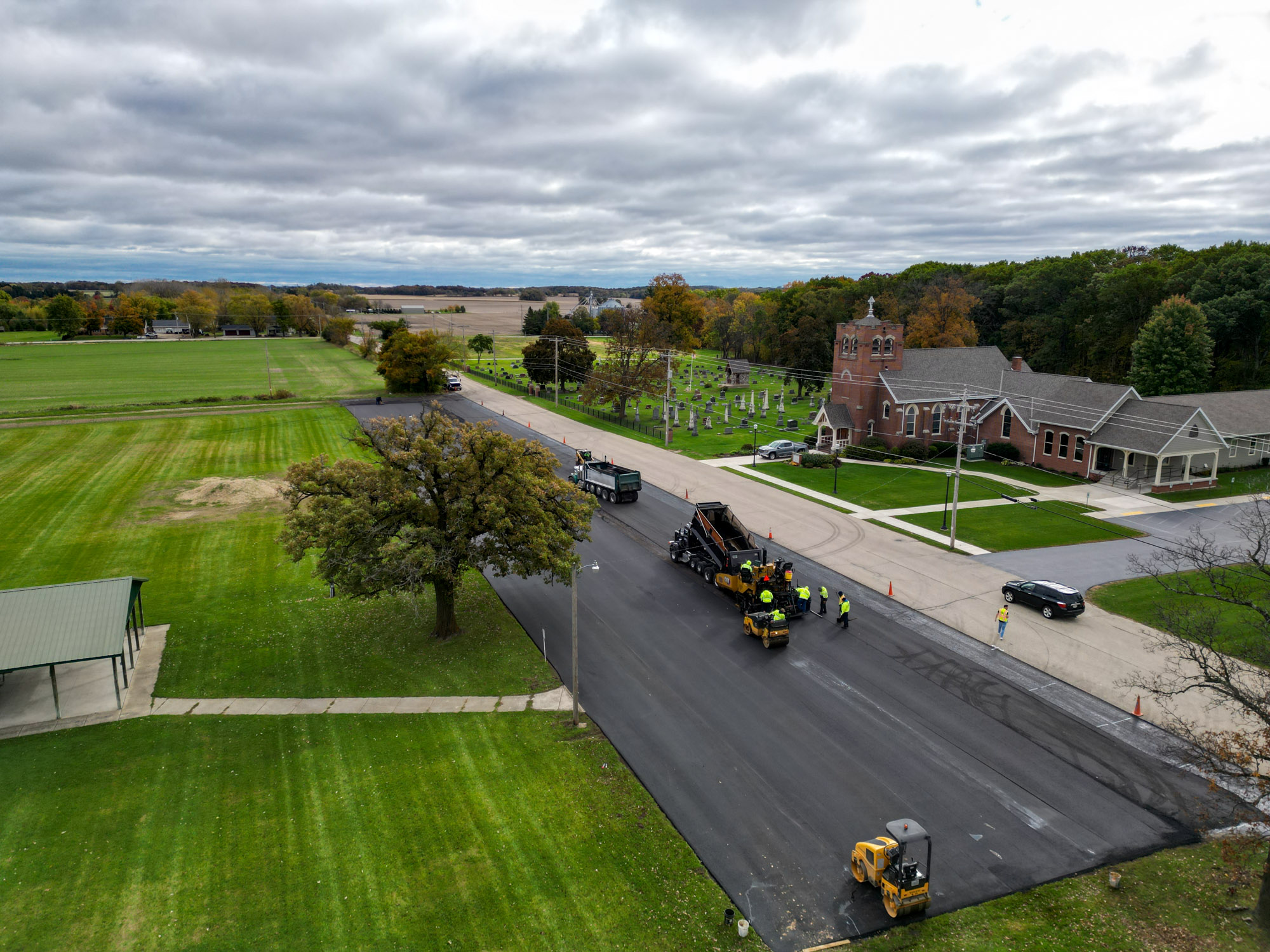
Shallow ponding often comes from a slight dip. We can mill the surface to restore slope and place a new asphalt layer with the correct grade. In some cases, leveling courses are installed to correct cross slope before paving the final lift. Proper compaction and transitions help keep water moving to inlets.
Installing and Upgrading Drains
If your lot lacks collection points or the existing ones are overwhelmed, we add new structures or enlarge what you have.
- Catch basins: Collect surface water and connect to storm sewer
- Trench drains: Long, narrow drains that capture sheet flow across drive lanes and ramps
- Curb inlets: Pull water from gutters at low points and corners
- Area drains: Target isolated depressions near docks or dumpsters
We set inlet elevations to match finished pavement so water finds the drain without creating trip hazards.
Underdrains and Base Stabilization
When a high water table or saturated soils are part of the problem, we may install perforated underdrains to move subsurface water away from the base. Geotextiles, base reinforcement grids, or cement stabilization can strengthen weak spots and prevent future settlement. A strong base is the foundation of reliable parking lot drainage.
Permeable Pavement Options
For specific areas like overflow parking or low traffic stalls, permeable asphalt or concrete can reduce surface water by allowing it to pass through to an engineered stone bed. This option works well when paired with underdrains and routine vacuum sweeping to maintain porosity.
Targeted Repairs: Crack Sealing, Infrared Patching, and Sealcoating
Stopping water entry is vital. Hot rubber crack sealing blocks water from entering existing cracks. Infrared patching blends new asphalt with old to eliminate small depressions and cold joints. Sealcoating adds a protective layer against moisture and deicing chemicals. These services improve surface tightness and extend life when used with sound drainage design.
Concrete Solutions Where Loads Are High
Areas under dumpsters, at loading docks, or at entrances often benefit from reinforced concrete. Concrete pads resist rutting and settlement from heavy loads, which helps maintain proper grades and avoid ponding at the interface between materials. Asphalt Contractors builds and ties these pads into your drainage plan so water sheds cleanly.
Redirecting Roof and Surface Runoff
We can reroute downspouts into underground piping or to vegetated swales that slow water and keep it off the pavement. Small contour adjustments or adding curb cuts can guide sheet flow to safe discharge points. The goal is to keep concentrated water away from high traffic areas where it will freeze.
Winter Maintenance Tips to Reduce Icing
Even the best drainage system needs smart winter care. Use these practices to limit ice formation while you plan permanent fixes.
- Clear drains and grates after each snowfall and before a thaw
- Place snow piles away from low points, walkways, and drain inlets
- Use deicers that match the pavement temperature and conditions
- Sweep sand and debris from gutters to maintain flow lines
- Check and refill cracks before winter to stop water intrusion
- Monitor known ponding spots and treat them early in the day
- Train plow crews on site-specific drainage paths and hazards
Why Choose Asphalt Contractors Inc. for Parking Lot Drainage
Since 1979, Asphalt Contractors Inc. has delivered complete solutions for asphalt and concrete in Southeast Wisconsin. As a full-service contractor, we handle everything from site preparation and grading to paving, milling, concrete construction, and specialty drainage installations. We manufacture our own asphalt, which means consistent quality, mix control, and cost savings for our clients. Our certified crews use top-tier equipment to work efficiently and finish to a high standard.
We understand local soils, storm patterns, and freeze thaw cycles. That matters when you are solving parking lot drainage. A fix that looks good on paper must perform in January as well as July. Asphalt Contractors brings field experience and design know-how to every project, whether it is a small retail lot or a large industrial site. We serve Racine, Kenosha, Walworth, Waukesha, and Milwaukee counties with fast response and reliable scheduling.
FAQs About Parking Lot Drainage
Can you fix drainage problems in winter?
Some work can be done in cold weather, such as clearing and adjusting basins, temporary milling to relieve ponding, and targeted cold weather patches. Permanent solutions like full-depth repairs, regrading, and new paving are best completed in warmer months for proper compaction and bonding. Asphalt Contractors can implement short-term safety measures now and schedule long-term repairs for spring.
How long does a drainage project take?
Small fixes like installing a single basin or milling out a minor low spot may be completed in a day. Larger projects that involve multiple drains, underdrains, and resurfacing can take several days to a couple of weeks depending on the size of the lot and weather. We phase work to keep key areas open and limit business disruption.
Will I need to close my parking lot?
Partial closures are common, but full closures are rare for most projects. We plan phasing and traffic control so customers and deliveries can access the property while we work. Our crews coordinate with your operations to schedule noisier or disruptive tasks during off-peak hours when possible.
Is permeable pavement a good choice for my site?
It can be a smart option for overflow stalls or low traffic zones where soil conditions and maintenance practices support it. Permeable surfaces need regular vacuum sweeping to prevent clogging. Asphalt Contractors will evaluate your subgrade, expected traffic, and maintenance plan to see if permeable pavement fits your goals and budget.
What is the most cost-effective fix?
The best value depends on the cause. Clearing and repairing drains is often the least expensive and most effective first step. If grading is the issue, a targeted mill and overlay can be more cost-effective than repeated patching. When the base is failing, full-depth reconstruction in the affected area prevents recurring problems. Our assessments focus on addressing the source so you are not paying for the same repair every year.
Protect Your Investment With a Drainage Plan
Parking lot drainage is not a luxury. It is a core part of pavement performance, safety, and curb appeal. A lot that drains well resists cracking, lasts longer, and costs less to maintain. In Wisconsin, where temperatures swing and snow is a constant, the payoff is even greater. Asphalt Contractors can deliver a clear plan that tackles urgent hazards and lays out a path for long-term reliability.
- Assess your lot during and after a storm or thaw
- Document ponding locations, depths, and safety issues
- Schedule a professional parking lot drainage evaluation
- Prioritize quick safety fixes and plan permanent improvements
- Maintain drains and cracks to protect your investment
Schedule an Expert Drainage Assessment Today
If standing water is freezing on your pavement, do not wait for spring potholes to grow. Call Asphalt Contractors for a professional evaluation and a clear, cost-effective plan. Our team has over four decades of experience solving parking lot drainage problems for businesses, property managers, and municipalities across Southeast Wisconsin. We will help you move water off your lot, prevent ice, and extend the life of your asphalt or concrete. Request your assessment and estimate today, and let Asphalt Contractors Inc. put proven solutions to work for your property.