Does My Parking Lot Need Repair? The Simple Way to Tell
If you are asking does my parking lot need repair, you are already on the right track. A quick visual check can tell you a lot about safety, curb appeal, and hidden risks that drive up costs. In this guide, you will learn a simple checklist you can complete in minutes, how to read common signs, and when to bring in a professional. You will also see how Asphalt Contractors Inc. helps property managers and owners in Southeast Wisconsin get reliable, cost-effective solutions.
Start With the Big Picture: How Old Is Your Lot and How Does It Look?
Age and overall condition are your easiest indicators. Most asphalt parking lots last 15 to 25 years with regular crack sealing and sealcoating. Lots that go many seasons without maintenance age faster, especially in Wisconsin with freeze and thaw cycles. If your lot is over 10 years old and has not had routine care, it is smart to schedule an assessment now. If the surface is dark, smooth, and drains well, good news. If you see cracks, standing water, or faded striping, repairs may be due this year.
Quick Signs You Can Spot in Seconds
- Cracks wider than a pencil, especially spreading or branching cracks
- Potholes or crumbling edges where pieces break off under traffic
- Pooling water that lingers a day or more after rain
- Faded or missing lines, arrows, and handicap markings
- Loose gravel on the surface, also called raveling
- Sun-faded gray color that looks dry or brittle
- Uneven areas where cars or foot traffic feel dips or bumps
- Oil spots that soften the surface and attract more damage
- Drainage grates or curbs pulling away from the asphalt
A 10-Minute Parking Lot Inspection You Can Do Today
Use this quick checklist to decide with confidence. You only need a notepad, a coin, and your phone for photos.
- Walk the full lot after a rain or snowmelt. Note any puddles and how deep they are.
- Check cracks. If a crack is wider than a pencil or deeper than a quarter, mark it for sealing or patching.
- Look for patterns. Alligator cracking looks like reptile skin and often means deeper base issues.
- Scan for potholes. Even small holes grow fast with traffic and winter weather.
- Inspect the edges. Edge breakup shows up where asphalt meets grass or curbs.
- Rub your shoe on the surface. If you see loose sand or stones, the surface binder may be wearing off.
- Assess striping. If lines are faded or missing, traffic flow and safety suffer.
- Check drainage features. Are catch basins, manholes, or grates level with the pavement, or are they sunken?
- Look at concrete areas. Curbs, sidewalks, and ramps should be solid and level with no gaps at the asphalt seam.
- Take clear photos. Capture close-ups and wide shots, including a coin for scale next to cracks or holes.
What Your Findings Mean
Hairline Cracks
Hairline or narrow cracks are common as asphalt ages. These are usually handled with crack sealing before they widen. If you handle these early, you slow water infiltration and extend the life of the lot.
Cracks Wider Than a Pencil
Wider cracks are letting water into the base. In Wisconsin, freeze and thaw cycles expand that water and make damage worse. Plan to seal these soon. If you have many long or intersecting cracks, you may need patching or an overlay in active areas.
Alligator Cracking
Alligator cracking looks like a web of small blocks. This often signals a base failure under the surface. Surface patching alone will not hold up. You may need full-depth patching in those zones and possibly milling and paving if large areas are affected.
Potholes
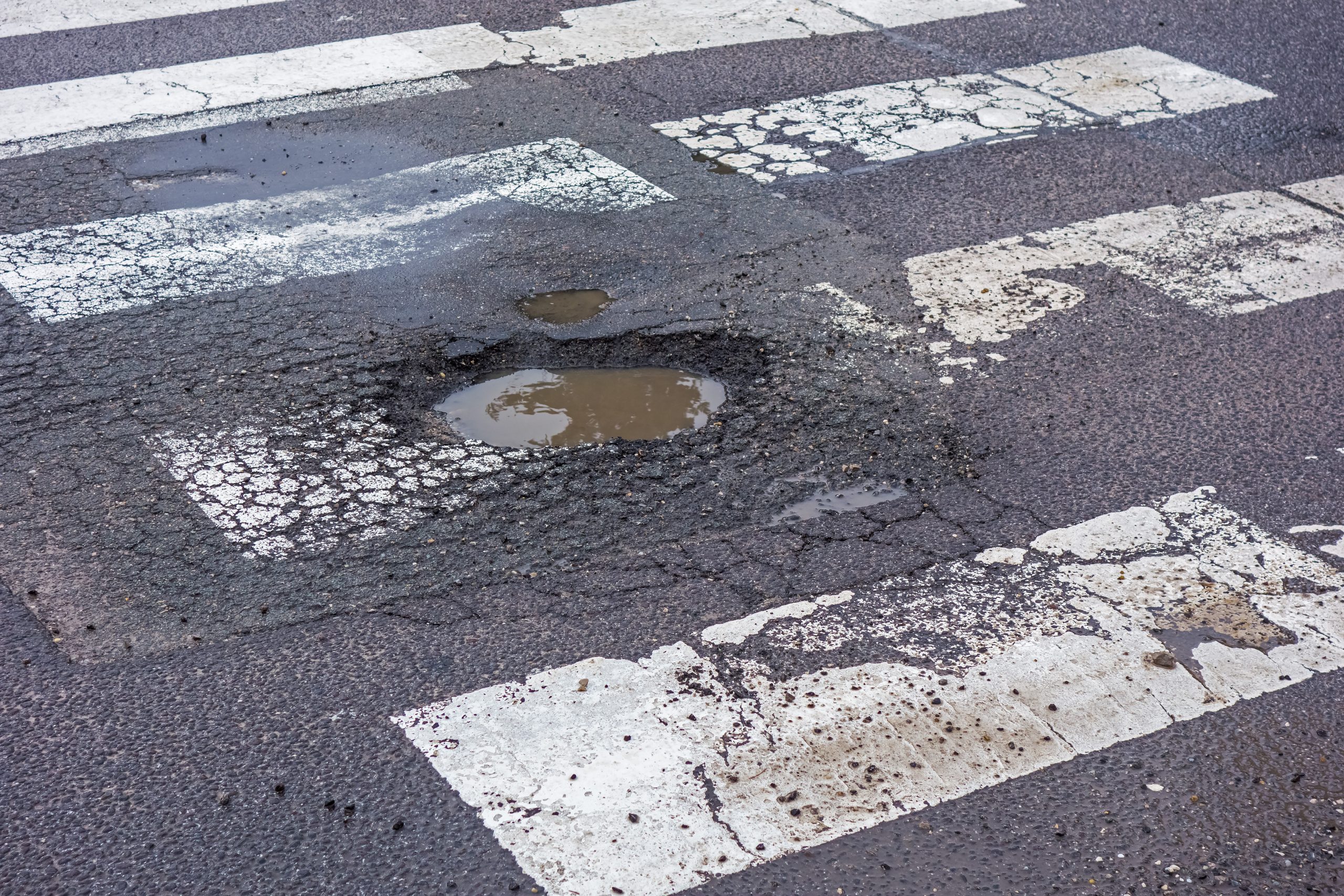
Potholes are a safety hazard and a liability risk. They also spread fast. A professional contractor should cut and patch potholes with hot mix to restore strength. Cold patch kits are temporary and should not be considered a lasting fix.
Raveling and Loose Aggregate
If the surface sheds sand or small stones, the binder is oxidizing. This makes the lot vulnerable to water and freeze damage. Timely sealcoating and minor repairs can help lock in the surface again before the issue deepens.
Standing Water
Water that does not drain is a red flag. It softens the asphalt, pushes fines out of the base, and speeds up cracking and potholes. Shallow depressions can often be leveled with a patch or thin overlay. Larger grade issues may need milling and paving to reset proper slope.
Faded Lines and Worn Markings
Faded lines do not damage the pavement directly, but they impact safety and compliance. Fresh striping improves flow, ADA access, and curb appeal. Often, property owners pair crack sealing and sealcoating with new striping for a clean, unified look.
Common Repairs and When They Make Sense
Crack Sealing
Best for: early to moderate cracks. Benefits include blocking water, stopping debris from entering the crack, and slowing growth. This is one of the highest value steps you can take if you are asking does my parking lot need repair and you want to avoid larger costs.
Sealcoating
Best for: protecting the surface from sun, salts, and oils while improving appearance. Sealcoating is not a structural fix, but when paired with crack sealing it helps preserve a sound lot. Many Wisconsin lots benefit from sealcoating every 2 to 4 years, depending on traffic and weather exposure.
Patching
Best for: potholes, localized base issues, or severe cracking in small areas. A saw-cut, full-depth hot mix patch restores structure. Skin patches that only cover the surface may not last in heavy traffic or winter climates.
Overlay or Mill and Overlay
Best for: widespread cracking or roughness where the base is mostly stable. An overlay adds a new asphalt layer. Milling the top layer before paving helps adjust height at transitions, improves smoothness, and addresses ruts. This is common for lots past mid-life that still have a solid foundation.
Reconstruction or Pulverize and Repave
Best for: end-of-life lots or major base failures. Pulverizing blends old asphalt into the base and creates a strong foundation for a new surface. Asphalt Contractors Inc. often uses this method to recycle materials and control costs while improving the base.
Seasonal Timing in Wisconsin
Spring is prime time to ask does my parking lot need repair because winter reveals weak spots. Freeze and thaw cycles force water into cracks and expand them. Snowplows can scrape and loosen edges. Early spring sealing and patching keeps small problems from becoming major. Late spring through fall is typical paving season in Southeast Wisconsin. Planning now avoids schedule crunches in summer.
Drainage, Concrete, and Transitions to Watch
Good drainage protects your investment. During your walk, check these details.
- Catch basins and manholes should be level. Sunken covers can create trip hazards and hold water.
- Gutter lines should be smooth so water flows off fast. Depressions along the curb trap water.
- Concrete curbs and sidewalks should not have gaps at the asphalt seam. Gaps let water penetrate and freeze.
- ADA ramps must be smooth with clear markings. Rough transitions risk liability and violate codes.
Cost Control: Fix Small Issues Before They Spread
Water is the main enemy of asphalt. Crack sealing and drainage fixes are the most cost-effective steps to slow aging. Many owners wait until potholes show up, which raises costs. If your 10-minute inspection finds early cracks, faded striping, and a few dips, schedule maintenance now. If you are unsure how to prioritize, Asphalt Contractors can rank repairs by urgency and phase the work to fit your budget.
DIY vs Professional Repairs
Hardware store crack filler and cold patch kits can help for a week or two but do not hold up to traffic or Wisconsin winters. Professional hot-applied crack sealants bond better and expand with temperature changes. Hot mix asphalt patches, placed and compacted with proper equipment, restore structure and last longer. If you want a quick visual improvement, DIY sealers exist, but they often wear unevenly. For commercial or multi-tenant properties, professional work reduces risk and liability.
How Asphalt Contractors Inc. Makes Repairs Last
Asphalt Contractors Inc., established in 1979 and based in Union Grove, Wisconsin, is a full-service paving contractor trusted across Racine, Kenosha, Walworth, Waukesha, and Milwaukee counties. Our team handles asphalt paving, maintenance, milling and pulverizing, concrete construction, site preparation, asphalt manufacturing, specialty services, and crushing. Because we manufacture our own asphalt, we control quality and pass cost savings to clients. We use top-tier equipment, certified crews, and proven methods that deliver strong, long-lasting results.
When you ask does my parking lot need repair, our approach starts with a free, no-pressure inspection. We document conditions, measure problem areas, and explain the root causes in plain language. You get clear options, from spot crack sealing to phased overlays, with timelines and budgets that make sense. For busy sites, we schedule work to minimize downtime and keep your property safe and accessible.
Simple Preventive Steps You Can Take This Year
- Sweep regularly to remove sand and debris that grind the surface.
- Seal cracks annually or as they appear to keep water out of the base.
- Sealcoat every 2 to 4 years depending on traffic, shade, and exposure to salts.
- Keep drains clear. Remove leaves and trash that block grates.
- Mark snow piles away from catch basins. Melting water should flow to drains.
- Use plow blades with rubber edges and set skids properly to avoid scraping.
- Clean oil spots early and use oil-resistant sealers in busy areas.
- Refresh striping to improve safety and ADA compliance.
When Repair Is Urgent
- Potholes or deep depressions in drive lanes or near entries
- Alligator cracking in active parking areas
- Standing water that covers drains or pedestrian paths
- Loose, raveling surface that sheds stones underfoot
- Trip hazards at joints, drains, or ramps
If you see any of these, call Asphalt Contractors for a prompt assessment. The sooner you act, the less you spend.
Answers to Common Questions
How often should I sealcoat?
In Southeast Wisconsin, most lots benefit every 2 to 4 years. High-traffic sites may need it more often. Always seal cracks before sealcoating for best results.
Can I wait until next year?
If you only have a few hairline cracks and good drainage, you may be fine. If you have pencil-wide cracks, potholes, or standing water, waiting risks higher costs. Ask yourself does my parking lot need repair to avoid surprise failures during winter.
How do I choose between patching and overlay?
Patching is great for localized damage. If more than 25 to 30 percent of the lot has issues, an overlay or mill and overlay may be more cost-effective and durable. A professional inspection helps you decide.
Is recycling possible?
Yes. Milling and pulverizing reuse existing asphalt in the new base or mix. Asphalt Contractors offers in-house manufacturing and crushing, which supports recycling and cost control.
Will repairs disrupt my business?
Work can be phased. We can divide the lot into sections and schedule off-hours or weekends. Clear signage and communication keep traffic moving.
A Simple Rule of Thumb
If you can slide a pencil into a crack or if water stands after a rain, plan repairs this year. If you are still unsure, take photos and call Asphalt Contractors for a free on-site evaluation. We will explain what is urgent, what can wait, and how to make your budget go further.
Why Property Managers Choose Asphalt Contractors
- Proven since 1979 with deep Midwest climate experience
- Full-service paving, concrete, and maintenance under one roof
- In-house asphalt manufacturing for quality and savings
- Modern equipment and certified crews for efficient, reliable work
- Clear communication, detailed plans, and phased schedules
- Service across Racine, Kenosha, Walworth, Waukesha, and Milwaukee counties
Make This Year the Year You Get Ahead of Damage
Your quick walk-through today can prevent headaches tomorrow. Use the 10-minute checklist, take notes, and ask does my parking lot need repair based on what you see. If the answer might be yes, Asphalt Contractors Inc. is ready to help with a free inspection and a plan that fits your site and schedules. Together, we will protect your pavement, improve safety, and keep your property looking its best all year long.