Understanding When Parking Lot Cracks Are Normal
If you manage a commercial property or own a business, you have likely asked yourself whether parking lot cracks are normal or a sign of real trouble. Asphalt expands and contracts with changing temperatures, traffic loads, and moisture. Because of that, small surface flaws often appear over time. The challenge is knowing when a crack is just routine wear and when it points to deeper damage in the base or subgrade. In this guide, you will learn how to tell the difference, how to prioritize repairs, and what steps protect your investment for years to come.
Asphalt Contractors Inc., also known as Asphalt Contractors, has served Southeast Wisconsin since 1979. We install, maintain, and repair asphalt and concrete for clients across Racine, Kenosha, Walworth, Waukesha, and Milwaukee counties. With our own asphalt manufacturing and a certified team, we help property owners sort out whether parking lot cracks are normal wear or a red flag that needs quick attention. Keep reading for practical tips and a simple checklist you can use right away.
Why Parking Lot Cracks Appear
Parking lots face constant stress. Cars and delivery trucks apply loads every day. Sunlight oxidizes the surface. Rain and snow work their way into tiny gaps. In cold regions like Southeast Wisconsin, freeze and thaw cycles cause asphalt to flex again and again. Over time, that movement opens small fissures. A well built parking lot with routine maintenance will still develop minor cracks, and many of them are not alarming. The key is whether the crack is stable and shallow or growing, deep, and linked to base movement or poor drainage.
Some cracks start at the surface and move downward. Others reflect movement below the asphalt, like where an old joint or trench line exists. Lack of sealcoating and delayed crack sealing allows water to penetrate, which weakens the base and makes cracks worse. Understanding the source helps you choose the right repair, which saves money and avoids wasted effort.
Parking Lot Cracks: Normal or a Red Flag?
Asphalt professionals use the width, pattern, location, and activity of a crack to judge its severity. Below are practical signs to look for when deciding whether parking lot cracks are normal or something more serious.
Signs a Crack Is Normal Wear
- The crack is hairline thin and shallow.
- It does not show raveling or loose aggregate around the edges.
- There is no pumping of water or fines when traffic passes over it.
- The crack is stable across seasons with little or no growth.
- You see light, random lines that do not form a repeating pattern.
- There is no depression or hollow next to the crack.
Signs a Crack Is a Red Flag
- The crack is wider than a quarter inch and growing.
- The edges are crumbling or breaking off into small pieces.
- Cracks form a network like reptile skin, often called alligator cracking.
- Water collects near the crack, or you see pumping when a vehicle passes.
- The crack runs along the edge of the pavement, especially near poor drainage.
- The surface is sinking or rutting near the cracked area.
- Cracks reflect through a newer overlay soon after paving.
Common Crack Types and What They Mean
Hairline Surface Cracks
Hairline cracks are thin, random surface lines that form as asphalt oxidizes and shrinks slightly. In many cases, these parking lot cracks are normal signs of aging. They are often solved with timely crack sealing and periodic sealcoating to block water and UV exposure.
Longitudinal and Transverse Cracks
Longitudinal cracks run parallel to the traffic flow. Transverse cracks run across the pavement, often due to temperature movement. A few isolated cracks of this kind may be normal. If they widen or repeat at regular spacing, it can indicate issues with thermal stress or joint movement. Sealing stops water from getting in and limits widening.
Block Cracking
Block cracking forms square or rectangular grids. It usually points to aging asphalt binder that has hardened. It is not always a structural failure, but it allows moisture in. Crack filling, sealcoating, and sometimes a thin overlay can restore flexibility. If the blocks move under load, deeper repairs may be needed.
Alligator Cracking
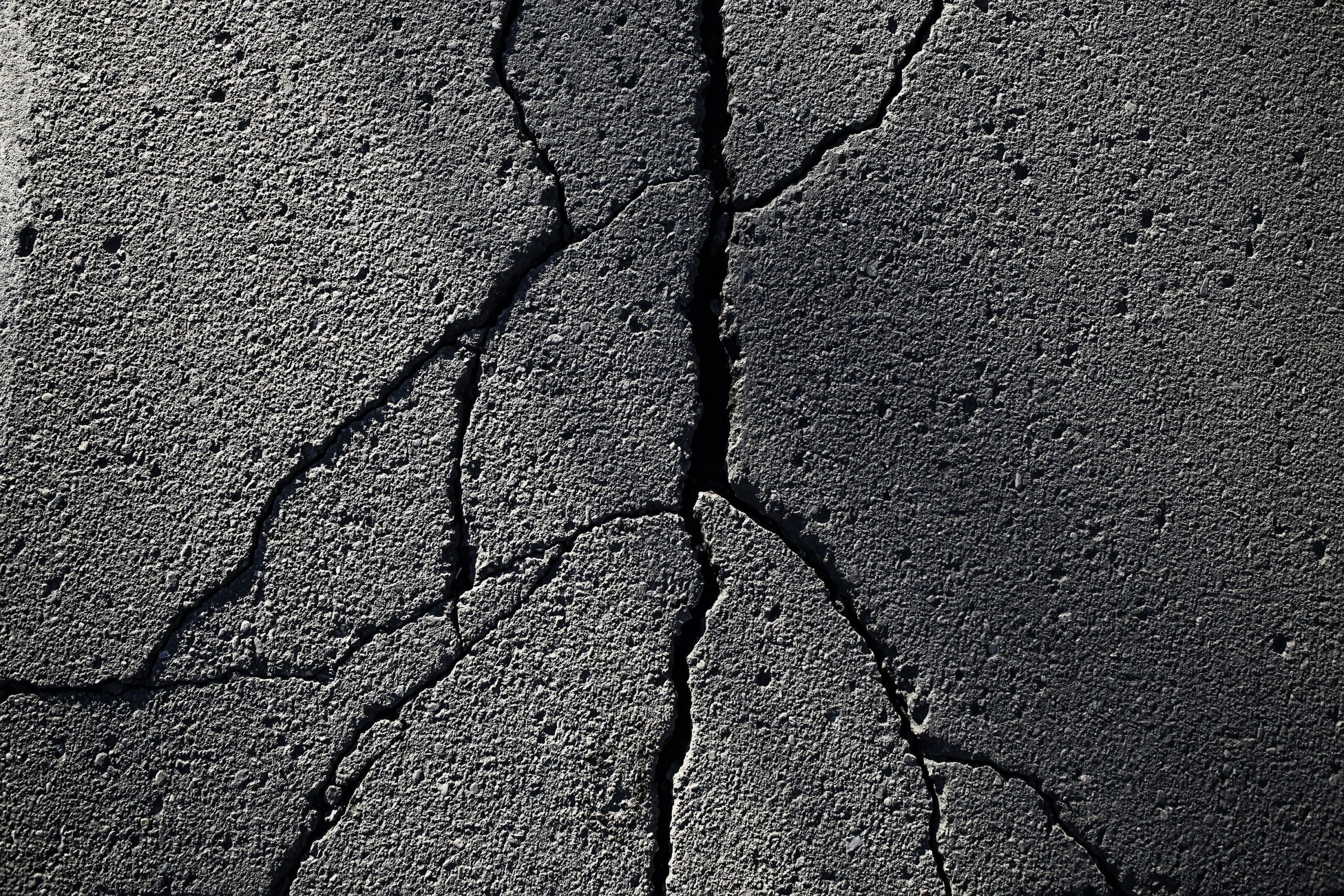
Alligator cracking, also called fatigue cracking, looks like broken glass or reptile skin. This pattern is not parking lot cracks normal wear. It often signals failed support under the surface. Surface treatments will not fix it for long. The best solution is a full depth patch that replaces the damaged asphalt and supports below.
Edge Cracking
Edge cracks run along the outer limits of the pavement. They are common where the shoulder is weak or drainage is poor. Early edge cracking may be repaired with crack sealing and shoulder support. If the edge is breaking away, base repairs and rebuilding the edge are needed to stop further loss.
Reflection Cracking
Reflection cracks show up in an overlay above joints or cracks in the old pavement. They are common over trench lines and patched areas. Proper joint preparation and reinforcing fabrics can slow reflection. Once they show, sealing is important to keep water out.
Potholes and Raveling
Potholes and raveling, where aggregate loosens from the surface, are signs of advanced distress. These are never considered parking lot cracks normal. They indicate water intrusion, freeze damage, or heavy load failures. Patching, and in many cases milling and paving, is needed to restore a safe surface.
How Wisconsin Climate and Traffic Affect Cracking
Southeast Wisconsin pavement faces wide temperature swings. Winter freeze and thaw cycles push water to expand in cracks, which pries them open. Deicing chemicals and plow blades add stress. Summer sun oxidizes asphalt, making it more brittle. Heavy trucks increase the stress on weakened areas and speed up fatigue cracking. Because of these local conditions, timely crack sealing and sealcoating are essential, even for lots that see moderate traffic.
Asphalt Contractors understands these regional demands. By manufacturing our own asphalt, we adjust mixes for local conditions and schedule repairs for the right season. For example, crack sealing is best when cracks are dry and clean, and in temperatures that allow sealant to bond well. Our crew uses specialized routers and air cleaning to ensure a tight seal that lasts.
When to Fix Cracks and What to Use
Crack Sealing vs. Crack Filling
Crack sealing uses a flexible rubberized sealant and is ideal for working cracks that open and close with temperatures. It is the best long term defense for longitudinal and transverse cracks. Crack filling is used for non working cracks and wider gaps where movement is minimal. Both solutions protect the base by keeping water out. If you are trying to decide whether to seal or fill, consider whether the crack changes width through the seasons. Asphalt Contractors can evaluate this during an inspection.
Skin Patching vs. Full Depth Patching
Skin patches address shallow defects and small potholes. They level the surface but do not solve deep structural issues. Full depth patches cut out the failed asphalt and repair the base. Choose full depth when you see alligator cracking, edge failure, or repeated potholes in the same area. It costs more up front but prevents recurring issues.
Sealcoating
Sealcoating provides a protective film against UV rays, moisture, and chemicals. It also refreshes appearance and can reduce minor raveling. It does not fix structural problems. Applied every few years, sealcoating supports a maintenance plan and reduces overall life cycle costs.
Overlay vs. Mill and Pave
A hot mix asphalt overlay adds a new surface layer over the existing pavement. It addresses widespread surface wear and minor irregularities. Milling and paving removes a set depth before laying new asphalt, which helps with drainage and smooths transitions. If deep failures are present, you may need targeted full depth repairs before an overlay. Asphalt Contractors uses milling and pulverizing equipment to right-size this approach for each lot.
A Simple DIY Inspection Checklist
- Walk the lot after rain and note any standing water. Drainage problems speed up crack growth.
- Measure a few cracks. Note any that are wider than a quarter inch.
- Look for patterns like alligator cracking or block cracking.
- Press near cracks with your foot. Soft or pumping areas signal base problems.
- Check edges and curb lines for breakdown and erosion.
- Inspect high traffic zones like drive lanes and loading areas for rutting.
- Note trip hazards or gaps near pedestrian routes and accessible parking.
- Track whether cracks have grown since last season. Photos help.
- List any reflection cracks over old joints or trenches.
- Schedule a professional evaluation if you find multiple red flag signs.
Risks of Waiting Too Long
- Water makes cracks widen and undermines the base.
- Freeze and thaw cycles turn small gaps into potholes.
- Premature failure leads to expensive full depth repairs.
- Trip and fall hazards raise liability risk.
- Poor drainage and surface damage push customers away.
- Unsealed cracks reduce the life of any future overlay.
Budget Planning and Life Cycle Savings
Timely maintenance costs far less than major reconstruction. A routine plan that includes crack sealing, patching, and periodic sealcoating can extend pavement life by many years. It also lets you budget in phases instead of paying for a complete rebuild all at once.
Asphalt Contractors can build a multi year plan for your property. By inspecting your lot and ranking repairs by urgency, we help you focus on high value actions first. Many clients choose to seal and crack seal this year, then plan targeted patches and striping next season. Because we produce our own asphalt, we can often deliver competitive pricing and reliable schedules.
Why Choose Asphalt Contractors Inc.
Asphalt Contractors Inc., based in Union Grove, Wisconsin, is a full service paving contractor with over four decades of experience. We serve commercial and residential clients in Racine, Kenosha, Walworth, Waukesha, and Milwaukee counties. Our services cover asphalt paving, maintenance, milling and pulverizing, concrete, site preparation, asphalt manufacturing, specialty services, and crushing. Owning our asphalt plant gives us control over mix quality and availability, which leads to consistent results and cost savings.
Our crews are trained and certified. We use purpose built equipment for crack routing, sealcoating, milling, and paving. Whether your concern is a few hairline cracks or widespread fatigue cracking, we offer a right sized solution. We will tell you when parking lot cracks are normal and when they need repair, then explain the options in clear terms so you can decide with confidence.
Our Inspection and Repair Process
- On site assessment. We evaluate crack types, widths, patterns, drainage, and traffic loads.
- Moisture and base check. We look for signs of pumping, soft spots, and edge instability.
- Repair plan. You receive a written proposal with options, pros and cons, and a timeline.
- Execution. Our team completes crack sealing, patching, or paving with minimal disruption to your business.
- Maintenance roadmap. We provide a schedule for future sealcoating and checks to protect your investment.
Industries We Serve
- Retail centers and grocery stores
- Medical and office complexes
- Schools and universities
- Industrial parks and warehouses
- Apartment and condo communities
- Municipal and public facilities
Frequently Asked Questions
Are small parking lot cracks normal?
Yes. Thin, shallow cracks without crumbling are common as asphalt ages. Sealing them early keeps water out and prevents bigger problems.
How often should I seal cracks?
Inspect every spring and fall. Seal active cracks as soon as they are clean and dry. Many properties benefit from yearly crack sealing in high traffic areas.
Do I need to sealcoat every year?
No. Most lots benefit from sealcoating every two to three years, depending on traffic and weather exposure. Sealcoating is a protective layer, not a structural fix.
What if I see alligator cracking?
Alligator cracking is not parking lot cracks normal wear. It signals structural fatigue. Plan for full depth patching to replace failed material and restore support.
Can I wait until summer to fix cracks?
It depends on the severity. If water is getting in or freeze cycles are active, waiting can make the damage worse. Asphalt Contractors can advise on timing based on current conditions.
Will an overlay hide all cracks?
An overlay refreshes the surface but may not stop cracks from reflecting through. Proper preparation and targeted base repairs reduce reflection and help an overlay last longer.
Pro Tips to Keep Cracks Under Control
- Seal cracks before winter to block freeze expansion.
- Keep drains and catch basins clear to move water away.
- Sweep debris that can trap moisture and break down the surface.
- Restrict heavy truck traffic to designed routes with better support.
- Repaint lines after maintenance to guide vehicles and protect edges.
- Log observations with dates and photos to track changes over time.
Are These Cracks a Big Deal or Normal Wear? Here Is Your Next Step
If you are still unsure whether your parking lot cracks are normal or a warning sign, bring in a trusted local team. Asphalt Contractors will evaluate your lot, explain what the patterns mean, and outline practical fixes that match your budget. Our experience in Southeast Wisconsin, plus our in house asphalt manufacturing, means you get reliable guidance and durable results.
Protect your property, reduce risk, and improve curb appeal. Contact Asphalt Contractors today to schedule an inspection and get a clear plan to keep your parking lot in top shape.